

Best Hair Growth Serum for Rapid Weight Loss
Table of Contents
- Why Hair Loss Happens During Rapid Weight Loss
- Hair Loss from Rapid Weight Loss: Understanding the Connection to GLP-1
- GLP-1 Hair Loss: What the Research Shows
- How Long Does Hair Take to Grow Back After Weight Loss
- Hair Growth Serum Ingredients That Work
- Grow: Peptide Hair Growth Serum for Scalp Support
- Supporting Hair Recovery: The Role of Internal Nutrition
- When to Talk to a Clinician About Hair Loss
- Frequently Asked Questions
Last Updated: October 6, 2026
Why Hair Loss Happens During Rapid Weight Loss
Hair loss during rapid weight loss is distressing, but understanding why it happens is the first step toward managing it. Rapid weight loss puts your body under metabolic stress, and hair follicles respond by entering the telogen phase, a resting stage where hairs eventually shed (Telogen Effluvium Associated With Weight Loss: A Single Center Retrospective Study). This condition, telogen effluvium, typically begins 2-3 months after rapid weight loss starts and can persist for several months.

The mechanism is straightforward: rapid weight loss depletes the nutrients your follicles need to stay in the active growth phase. Iron, zinc, biotin, and amino acids become scarce when caloric intake drops, and your body redirects them to vital organs. For people taking GLP-1 medications like semaglutide or tirzepatide, this stress compounds because these drugs suppress appetite and can impair nutrient absorption.
The good news is that this hair loss is temporary and manageable. Follicles don't die, they pause. Once you stabilize your weight and restore nutrient levels, they reactivate, and most people see new growth within 3-4 months of addressing nutritional gaps.
Hair Loss from Rapid Weight Loss: Understanding the Connection to GLP-1
GLP-1 medications like semaglutide and tirzepatide accelerate weight loss far beyond diet alone, intensifying nutritional stress on hair follicles. They slow gastric emptying and signal fullness to the brain, so you eat less and absorb nutrients less efficiently, a double hit to your nutritional status.
Hair loss from rapid weight loss becomes pronounced in the first 3-6 months of GLP-1 use. Losing 10-20 pounds per month for heavier individuals triggers telogen effluvium. The medication doesn't cause hair loss directly, but the extreme caloric deficit it enables does. GLP-1 medications can also cause nausea, vomiting, and food aversions, making nutrient-dense foods harder to consume.
Research on GLP-1 and hair loss is still emerging, but clinical observations confirm shedding increases significantly in the first 6 months of treatment. Severity depends on how quickly you lose weight, your baseline nutritional status, and whether you replace lost nutrients. People who maintain consistent protein intake and supplement strategically experience less dramatic hair loss than those who simply restrict calories.
GLP-1 Hair Loss: What the Research Shows
Hair loss associated with GLP-1 medications is primarily a consequence of rapid weight loss, not a direct drug side effect. The mechanism is telogen effluvium, triggered by metabolic stress and nutrient depletion. Clinical dermatology literature identifies rapid weight loss as a common trigger, and peak shedding occurs 2-4 months into therapy.
Managing GLP-1 hair loss starts with understanding it's predictable and preventable through early nutritional intervention. People who maintain adequate protein intake (at least 80-100 grams daily despite reduced calories), supplement with key micronutrients, and stabilize their weight loss rate experience significantly less shedding. Those who chase rapid weight loss without nutritional support often see visible thinning by month 4-5.

Once you've stabilized your weight and restored nutrient levels, hair regrowth typically begins within 8-12 weeks, and full recovery to baseline density usually takes 6-12 months. Early intervention with a best hair growth serum for rapid weight loss and nutritional support is valuable because you're preventing preventable loss and accelerating recovery, not reversing permanent damage.
How Long Does Hair Take to Grow Back After Weight Loss
The timeline for hair regrowth after weight loss depends on how quickly you address nutritional gaps and stabilize your weight. Hair grows about half an inch per month, so visible regrowth takes time, but the process begins sooner than you see it.
Here's what the realistic timeline looks like:
Weeks 1-8: Follicles shift out of the telogen (resting) phase back into anagen (active growth). You won't see new growth yet, but the process is underway, which is why starting nutritional support immediately matters.
Weeks 8-16: New hair appears at the scalp, initially fine and barely visible. Many people report less shedding during this phase, which is reassuring even if full density hasn't returned.
Months 4-6: New growth becomes obvious, hair feels thicker near the roots, and you'll notice less hair in your brush. The best hair growth serum for rapid weight loss works during this window by supporting the follicles producing this new growth.
Months 6-12: Full recovery of hair density, as most dormant hairs are replaced with new growth. Some people take up to 18 months, depending on the severity of initial loss and consistency of nutritional support.
Consistency is critical. You can't rush hair growth, but you can prevent it from stalling by maintaining stable nutrition and weight. Yo-yo dieting or sudden caloric restriction will trigger another round of shedding.
| Timeline | What's Happening | What You'll Notice |
|---|---|---|
| Weeks 1-8 | Follicles shift from resting to active phase | Continued shedding, no visible new growth yet |
| Weeks 8-16 | New hair emerges at scalp | Fine new growth, less shedding |
| Months 4-6 | New hair strengthens and thickens | Noticeable density increase, fuller appearance |
| Months 6-12 | Full recovery of baseline density | Return to pre-loss hair thickness |
Hair Growth Serum Ingredients That Work
The most effective ingredients in a best hair growth serum for rapid weight loss address the root cause: supporting follicles during their transition back to active growth and providing the building blocks they need.
Peptides are the foundation of effective hair serums. Compounds like sh-Polypeptide-1 and sh-Oligopeptide-10 signal hair follicles to remain in or return to the anagen phase.
Arginine, an amino acid, supports hair strength by improving blood flow to the scalp and providing the building blocks follicles need for protein synthesis.
Botanical extracts like saw palmetto, rosemary, and eucalyptus have traditional use in hair care, and modern research supports their role in scalp health. Saw palmetto supports the appearance of fuller, thicker hair.
Scutellaria baicalensis, a traditional herbal extract, nourishes the scalp and supports a balanced microenvironment for hair growth, the foundation for healthy hair.
Grow: Peptide Hair Growth Serum →
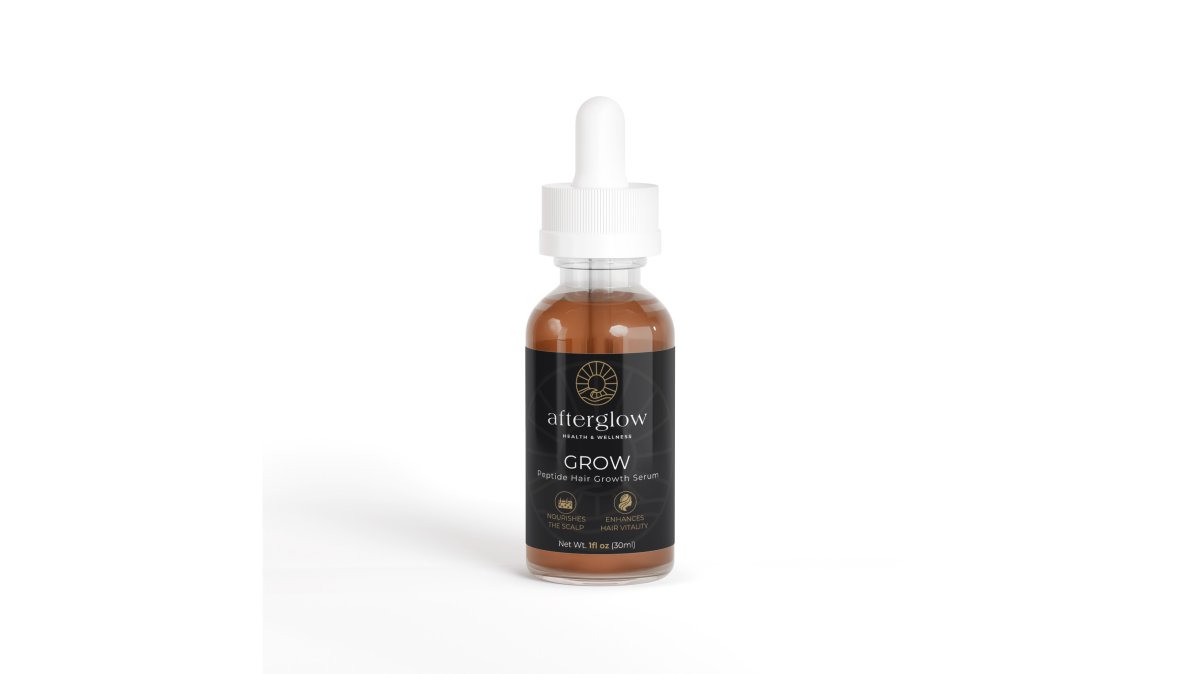
Together, these ingredients address both the immediate need (supporting follicles during regrowth) and the foundational need (scalp health and nutrient delivery).
Grow: Peptide Hair Growth Serum for Scalp Support
Our top recommendation is Grow: Peptide Hair Growth Serum from Afterglow, designed for people navigating the nutritional challenges of rapid weight loss. It combines five peptides with a targeted botanical blend that addresses the exact mechanism of hair loss during GLP-1 treatment: follicle dormancy and scalp nutrient delivery.
The formula includes sh-Polypeptide-1 and sh-Oligopeptide-10, which signal hair follicles to remain in active growth. Arginine provides the amino acid foundation follicles need for protein synthesis, especially critical when appetite suppression constrains your protein intake.
What sets this serum apart is the botanical blend: saw palmetto supports fuller-looking hair, rosemary extract improves scalp circulation, eucalyptus soothes and provides antimicrobial benefits, and Scutellaria baicalensis keeps the scalp environment balanced. These ingredients work synergistically, not as a scattered list of trendy botanicals.
The serum is lightweight and fast-absorbing, so it integrates seamlessly into a daily routine without greasy residue. Apply a few drops directly to the scalp and massage gently for 1-2 minutes to promote circulation and even distribution.
At $59, Grow is a targeted treatment. Third-party testing and GMP-certified manufacturing ensure purity and potency for daily scalp application.
Supporting Hair Recovery: The Role of Internal Nutrition
A topical serum works best paired with internal nutritional support. Many people use a hair growth product but neglect the systemic nutrition that drives recovery.
The micronutrients most critical for hair recovery are biotin, zinc, iron, and B vitamins. Biotin supports keratin production, the protein that makes up hair. Zinc is essential for hair growth and immune function, both compromised during rapid weight loss.
Standard multivitamins often contain suboptimal doses of these nutrients. With faster gastric emptying and suppressed appetite, you eat less and absorb less.
Renew: Hair, Skin and Nails Essentials from Afterglow contains 5000mcg of biotin, zinc and iron, and a proprietary herbal blend of horsetail, fo-ti, and bamboo extract.
The formula also includes antioxidant vitamins A, C, and E to protect follicles from oxidative stress during rapid weight loss. Take two capsules daily with food, which fits a realistic routine even when appetite is suppressed.
At $32.90, Renew is foundational nutritional support. Combined with a topical serum like Grow, you address both the external scalp environment and the internal nutritional foundation.
When to Talk to a Clinician About Hair Loss
Not all hair loss during weight loss is telogen effluvium. Consult a dermatologist or primary care provider to rule out other causes if the pattern seems unusual or you have other symptoms.
You should talk to a clinician if:
- Your hair loss is asymmetrical or localized to one area of the scalp (suggests alopecia areata or another condition)
- You're experiencing hair loss on your body, not just your scalp (suggests systemic nutritional deficiency or hormonal imbalance)
- You have signs of scalp infection: redness, warmth, drainage, or tenderness
- Your hair loss persists beyond 12 months after stabilizing your weight and nutrition
- You're experiencing other symptoms: fatigue, weakness, pale skin, shortness of breath (suggests iron deficiency or other metabolic issues)
- You have a personal or family history of autoimmune conditions like alopecia areata
Most hair loss during rapid weight loss is straightforward telogen effluvium that resolves with time and nutritional support. Clinicians can run simple tests, iron panel, thyroid function, zinc and vitamin levels, to identify deficiencies requiring targeted intervention. This is especially valuable on GLP-1 medications, because your clinician can adjust nutritional support or medication timing to optimize absorption.
The conversation with your clinician should focus on prevention and support, not stopping weight loss. Hair loss is a manageable side effect, not a reason to discontinue treatment that's otherwise working. Your clinician can help optimize your approach: adjusting protein intake, timing supplements for absorption, or correcting deficiencies.
Hair loss during rapid weight loss is frustrating, but it's not permanent. The timeline is predictable when you understand the mechanism: follicles pause, not die. A best hair growth serum for rapid weight loss like Grow, combined with internal nutritional support like Renew, addresses both the topical scalp environment and the systemic nutrition your follicles need.
Frequently Asked Questions
What is the best hair growth serum for rapid weight loss?
Grow: Peptide Hair Growth Serum is formulated specifically to support hair density and thickness during periods of stress on the body, including rapid weight loss. It contains five peptides (sh-Polypeptide-1, sh-Oligopeptide-10, and others) plus botanical extracts like saw palmetto and scutellaria baicalensis that support scalp health. For comprehensive support, pairing a topical serum with internal nutrition through capsules like Renew: Hair, Skin and Nails Essentials addresses hair loss from both directions, scalp stimulation and nutritional support.
How long does hair take to grow back after weight loss?
Hair regrowth typically follows your natural hair cycle. Most people enter the anagen (growth) phase within 3-6 months of stabilizing their weight and nutrition. Visible thickening may take 6-12 months of consistent supplementation and healthy practices. Results depend on the severity of initial hair loss, overall nutrition, and whether you're supporting regrowth with targeted ingredients like biotin, peptides, and botanical extracts. Consistency matters more than speed.
What ingredients should I look for in a hair growth serum?
Look for peptides (like sh-Polypeptide-1 and sh-Oligopeptide-10) that support hair thickness and density, saw palmetto for hair-boosting properties, and botanical extracts like rosemary and eucalyptus for scalp nourishment. Arginine, an amino acid, supports hair strength and vitality. For internal support, biotin (5000 mcg), zinc, iron, vitamin C, and traditional botanicals like horsetail and fo-ti work together to support healthy hair structure and collagen formation during recovery.
Can I take hair growth supplements if I'm already on GLP-1 medication?
Yes, but consult your healthcare provider first. Afterglow's formulas are designed to complement GLP-1 treatment and address common nutritional gaps. Ease: GLP-1 Support includes biotin, iron, zinc, and B vitamins that support nutrient absorption during GLP-1 use. Renew: Hair, Skin and Nails Essentials provides beauty-supporting nutrients without conflicting with most medications. Always inform your doctor about new supplements, especially if you're managing multiple conditions or medications.