

Best Protein Powder for Semaglutide Users
Table of Contents
- Why Protein Matters for Semaglutide Users
- Protein Intake Recommendations for GLP-1 Users
- How to Maintain Muscle Mass During Rapid Weight Loss
- Best Protein Powder Options for Semaglutide Users
- Digestive Health Supplements for GLP-1 Users
- How to Choose Protein Powder When You Have Semaglutide Side Effects
- Practical Tips for Meeting Protein Goals Without Overeating
- Frequently Asked Questions
Last Updated: September 23, 2026
Why Protein Matters for Semaglutide Users
When you're on semaglutide, your body is in a unique metabolic state, which is why finding the best protein powder for semaglutide users is critical. The medication suppresses appetite and slows gastric emptying, which means you're eating less, sometimes significantly less. That's effective for weight loss, but it creates a serious problem: your muscles don't know the difference between intentional calorie restriction and starvation. Without adequate protein intake, your body will cannibalize lean muscle tissue to meet its amino acid needs, even as you're losing fat.
This is where the best protein powder for semaglutide users becomes critical. Muscle loss during rapid weight loss isn't just a cosmetic concern. Lean body mass drives your metabolic rate. Lose too much muscle, and your metabolism slows, making future weight loss harder and rebound weight gain more likely after you stop the medication. Protein synthesis, the process your body uses to build and maintain muscle, requires consistent amino acid availability. That's why strategic protein supplementation matters during this phase.
Afterglow was founded specifically to address these gaps in GLP-1 support. The brand's system of seven formulas targets muscle, gut, hydration, hair, and skin health to address common side effects experienced during and after weight loss journeys. Their Hold Performance Whey Protein Blend delivers 22 grams of protein per serving from a blend of whey protein isolate and whey protein concentrate to help support your daily protein intake.

Protein Intake Recommendations for GLP-1 Users
The standard recommendation for protein intake is roughly 0.8 grams per kilogram of body weight for sedentary adults. For people on semaglutide undergoing rapid weight loss, that number needs to be higher, typically 1.2 to 1.6 grams per kilogram of your current body weight, or about 0.55 to 0.73 grams per pound.
Here's the practical math: if you weigh 200 pounds, that's 110 to 146 grams of protein daily. For someone eating only 1,200 to 1,500 calories per day (common on semaglutide), hitting that protein target means protein should comprise 30 to 40 percent of your total calories. That's a significant shift from typical eating patterns.
The challenge isn't just the amount, it's consistency and digestibility. Semaglutide slows gastric emptying, which means food sits in your stomach longer. A heavy, fibrous protein source can trigger nausea or bloating. This is where a quality protein powder becomes practical. A shake takes seconds to consume, doesn't trigger the same satiety signals as whole food, and can be formulated to be gentler on your digestive system than a chicken breast or Greek yogurt.
Spread protein intake across the day rather than loading it into one or two meals. Protein synthesis works best with distributed amino acid availability, roughly 25 to 40 grams per meal, three to four times daily. This also helps manage hunger and energy levels on a reduced-calorie diet.
How to Maintain Muscle Mass During Rapid Weight Loss
Maintaining muscle during rapid weight loss requires three simultaneous interventions: adequate protein, resistance training, and micronutrient density. You can't achieve muscle preservation with protein alone.
Resistance training signals your body to keep muscle tissue. Without that stimulus, even high protein intake won't prevent significant lean mass loss. Aim for at least two to three sessions per week of strength training, focusing on compound movements that engage large muscle groups. This doesn't need to be intense, consistency matters more than intensity when your calorie intake is restricted.
The second piece is micronutrient density. Rapid weight loss depletes micronutrients faster than slow weight loss. Vitamins B12, B6, folate, iron, zinc, and biotin are particularly important for energy production, muscle function, and hair and skin health. Afterglow's Ease: GLP-1 Support formula provides a comprehensive spectrum of methylated and bioactive nutrients, including vitamin B12 (methylcobalamin), folate (5-MTHF), vitamin B6 (P5P), along with zinc, iron, biotin, and vitamin D3. These nutrients are selected to support normal energy production, healthy metabolism, and daily nutritional needs - particularly for individuals who want to maintain consistent micronutrient intake while managing dietary changes.

The third piece is caloric deficit management. You need enough of a deficit to lose weight, but not so aggressive that you're in severe metabolic stress. A deficit of 500 to 750 calories per day (roughly 1 to 1.5 pounds per week) preserves more muscle than aggressive deficits. On semaglutide, you may naturally eat in a larger deficit because appetite suppression makes it easy. That's where intentional protein intake becomes your muscle-preservation insurance.
Best Protein Powder Options for Semaglutide Users
Hold Performance Whey Protein Blend: Complete Amino Acid Profile
Afterglow's Hold Performance Whey Protein Blend delivers 22 grams of protein per serving from a blend of whey protein isolate and whey protein concentrate, providing all essential amino acids naturally present in whey. This matters because your body cannot synthesize essential amino acids, they must come from your diet or supplements.
The formula includes resistant potato starch, a source of dietary fiber that complements the protein without adding significant volume or triggering bloating. It's naturally flavored and sweetened with stevia leaf extract, no artificial sweeteners that can trigger gastrointestinal distress in people on semaglutide. The smooth texture mixes easily with water, making it genuinely pleasant to consume, not a chore.
At $55 per container, the cost works out to roughly $2.50 per serving for 22 grams of protein. The formulation is naturally flavored and sweetened with stevia leaf extract, and includes resistant potato starch, a source of dietary fiber.
The whey isolate component is processed to remove most lactose. The concentrate component provides additional micronutrients and bioactive compounds that are processed out of pure isolates.
Pros:
Hold Performance Whey Protein Blend →
- Complete amino acid profile supports muscle synthesis
- Stevia sweetening avoids artificial sweetener side effects
- Resistant potato starch provides prebiotic fiber without excess bulk
- Mixes cleanly without grittiness or chalky texture
- Third-party tested for purity and potency
- Formulated in FDA-registered, GMP-certified facilities
Cons:
- Whey is not suitable for vegans or those with dairy allergies
- Flavor options are limited (chocolate and vanilla only)
- Higher price point than mass-market brands
| Aspect | Details |
|---|---|
| Protein per serving | 22g |
| Sweetener | Stevia leaf extract |
| Fiber source | Resistant potato starch |
| Flavors available | Chocolate, Vanilla |
| Price | $55 per container |
| Best for | Semaglutide users prioritizing digestive comfort |
Digestive Health Supplements for GLP-1 Users
Protein powder alone doesn't solve the digestive challenges of semaglutide. Nausea, bloating, constipation, and changes in appetite are common side effects that interfere with consistent protein intake. That's where digestive support supplements become essential.
Afterglow's Ease: GLP-1 Support formula combines magnesium, probiotics, digestive enzymes, and botanical extracts like ginger and peppermint to support overall digestive function and comfort. Together, these ingredients help support the body’s natural processes for breaking down food and maintaining gastrointestinal balance.
The formula also includes ginger and peppermint extract, both of which have a long history of use for nausea and digestive comfort. Magnesium supports normal muscle and digestive function. The combination is designed to work together, not as isolated ingredients.
At $60 per container, Ease provides comprehensive digestive and micronutrient support in a single formula. The methylated B vitamins (B12, B6, folate) are bioavailable forms that your body can use immediately, unlike standard forms that require additional conversion steps.
How to Choose Protein Powder When You Have Semaglutide Side Effects
Managing Nausea and Taste Changes
Semaglutide changes how food tastes. Many people report that previously favorite foods become unappetizing, while others develop intense cravings for specific flavors. Protein powder can trigger nausea if the flavor is too rich or if the powder is too thick or chalky.
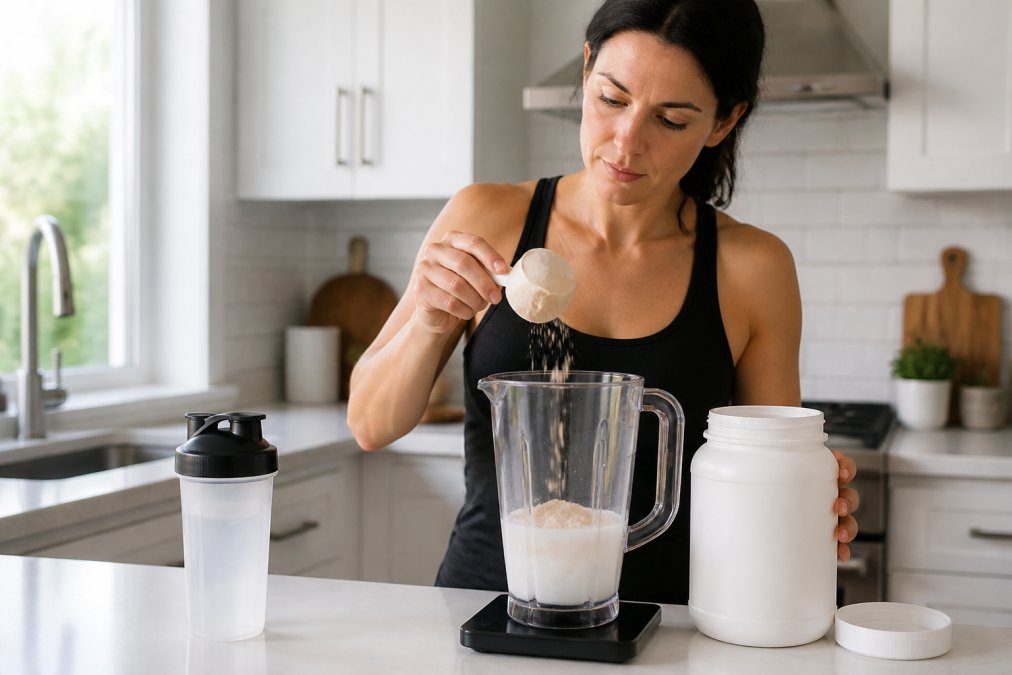
The best approach is to start with a small serving (one scoop instead of two) mixed with more liquid than usual. This reduces the volume in your stomach and makes the shake easier to consume. Vanilla tends to be more tolerable than chocolate for people experiencing nausea, it's lighter and less likely to trigger a gag reflex.
Temperature matters. Cold shakes are often better tolerated than room-temperature ones. Many people find that sipping a protein shake slowly over 10 to 15 minutes is more comfortable than drinking it quickly.
Flavor fatigue is real on semaglutide.
Avoiding Ingredients That Trigger Bloating
Artificial sweeteners, particularly sugar alcohols like sorbitol, xylitol, and erythritol, are common triggers for bloating and digestive distress in people on semaglutide. Your gut is already sensitive. Adding artificial sweeteners compounds the problem.
Practical Tips for Meeting Protein Goals Without Overeating
On semaglutide, your appetite is suppressed. Meeting your protein target without exceeding your calorie limit requires strategy.
Frequently Asked Questions
How much protein should I eat while on semaglutide?
Most health professionals recommend 1.6 to 2.2 grams of protein per kilogram of body weight daily for individuals on semaglutide, especially during active weight loss. This higher intake supports muscle preservation and helps maintain satiety on reduced calories. Spread protein across meals rather than consuming large amounts at once, which can trigger nausea or gastrointestinal discomfort. Start with 20-30 grams per meal and adjust based on your tolerance.
Why is protein intake important during rapid weight loss?
Rapid weight loss on semaglutide can trigger muscle atrophy if protein intake is insufficient. Adequate protein supports muscle maintenance, preserves lean body mass, and helps stabilize blood sugar levels. Additionally, protein synthesis depends on consistent amino acid availability, which is why daily intake matters more than occasional high-protein meals.
Can protein powder cause digestive issues for GLP-1 users?
Some protein powders can trigger bloating, nausea, or constipation in semaglutide users, especially those with artificial sweeteners, sugar alcohols, or high fiber content. Look for powders with digestive enzymes and minimal additives. Pairing protein powder with digestive support supplements like Ease: GLP-1 Support can help manage side effects while maintaining your protein goals.
What ingredients should I avoid in protein powder while on semaglutide?
Avoid artificial sweeteners like sucralose and aspartame. Sugar alcohols including sorbitol and xylitol may cause bloating and digestive upset. High-fiber additions can also trigger gas or constipation. Instead, choose powders sweetened with stevia leaf extract and formulated with minimal additives.