

Best Vitamins for Ozempic Face: A 2026 Guide
Table of Contents
- What Is Ozempic Face and Why It Happens
- How to Stop Hair Loss on Semaglutide
- Collagen for Skin Elasticity During Weight Loss
- GLP-1 Side Effects on Skin Health: What Vitamins Help
- Essential Micronutrients: B Vitamins, Zinc, and Copper
- Hydration and Skin Elasticity: The Overlooked Foundation
- Top Afterglow Products for Ozempic Face Support
- Conclusion
- Frequently Asked Questions
Last Updated: September 25, 2026
What Is Ozempic Face and Why It Happens
Ozempic face refers to the visible changes in facial appearance that occur during rapid weight loss on GLP-1 medications like semaglutide. The condition involves loss of subcutaneous fat beneath the skin, which can lead to sagging, hollowed cheeks, and reduced facial volume. When you lose weight quickly, your face loses fat deposits faster than your skin can adapt, creating a gaunt or aged appearance even though you're achieving your weight loss goals.
GLP-1 agonists reduce appetite by slowing gastric emptying, triggering rapid fat loss throughout your body, including facial fat that provides structure and elasticity. Nutrient deficiencies compound this, since your body isn't absorbing the vitamins and minerals needed for collagen synthesis and skin renewal.
The best vitamins for ozempic face address this gap directly through targeted supplementation that supports skin elasticity and firmness. Afterglow's formulas are specifically designed for GLP-1 users, accounting for the unique nutrient absorption challenges and skin health demands that come with semaglutide or tirzepatide treatment.

How to Stop Hair Loss on Semaglutide
Hair loss on semaglutide occurs through telogen effluvium, where rapid weight loss and nutrient depletion redirect resources away from hair growth. B vitamins, particularly B12, folate, and biotin, are critical enzymatic cofactors that support hair follicle health and protein synthesis.
B12 deficiency is most common among GLP-1 users because semaglutide slows stomach acid production, reducing B12 absorption. Without adequate methylcobalamin (the active form), hair follicles weaken and shed faster. Biotin also matters, supporting keratin production in your hair shaft.
Zinc is an enzymatic cofactor for hair growth and immune function. GLP-1 medications deplete zinc through increased urinary excretion, with deficiency showing as hair thinning within 2-3 months.
Afterglow's Hair, Skin and Nails Essentials includes 12 mcg of B12, 5000 mcg of biotin, and 7 mg of zinc per serving. Traditional botanicals like Horsetail and Saw Palmetto are included in its proprietary herbal blend.
| Nutrient | Role in Hair Health | Typical Deficiency Sign |
|---|---|---|
| B12 (Methylcobalamin) | Supports hair follicle protein synthesis | Hair thinning within 2-3 months |
| Biotin | Strengthens keratin structure | Brittle, weak hair shaft |
| Zinc | Enzymatic cofactor for follicle growth | Accelerated shedding, slow regrowth |
| Folate | Supports cell division in hair matrix | Dull, lifeless appearance |
| Iron | Carries oxygen to follicles | Hair loss with fatigue |
Collagen for Skin Elasticity During Weight Loss
Collagen is the primary structural protein that gives your skin firmness, elasticity, and volume. Rapid weight loss weakens collagen cross-linking because your body isn't producing enough new collagen to replace what's breaking down, causing sagging skin even in metabolically healthy individuals.
GLP-1 medications accelerate this process because rapid fat loss outpaces your skin's renewal cycle. Vitamin C is essential for collagen cross-linking, acting as a cofactor for enzymes that stabilize collagen molecules (pubmed.ncbi.nlm.nih.gov). Without adequate C, newly formed collagen is weak.
Vitamin A (retinol) activates genes that signal fibroblasts to increase collagen production. During weight loss, retinol stores deplete as fat tissue is mobilized. Amino acids like lysine and proline are collagen building blocks, and protein intake often drops on GLP-1 medications due to nausea.
Afterglow combines topical and systemic support. The Renew Skin Firming Cream provides DMAE for firmness, hyaluronic acid for hydration, and CoQ10 as an antioxidant. Users have observed a more refined appearance in the skin's texture around the neck and jawline areas with consistent use. With regular application, individuals have noted their skin feeling more supple and appearing more toned. Feedback indicates a noticeable improvement in the skin's firmness and tone around the eye area following consistent use. This product is intended to assist in the skin's hydration and overall refreshed appearance. For those looking to address the appearance of their lips, DMAE is included in our formula. It is applied with the intention of supporting the lips' hydration and fullness, contributing to a more plump appearance of the lips. The Hair, Skin and Nails Essentials supplies 120 mg of Vitamin C and 120 mcg of Vitamin A to support collagen synthesis from within.
GLP-1 Side Effects on Skin Health: What Vitamins Help
GLP-1 medications create specific skin challenges through nutrient malabsorption. Semaglutide slows gastric motility, reducing absorption of fat-soluble vitamins (A, D, E, K) and minerals like zinc and iron, causing deficiencies that show up on your skin within weeks.

Oxidative stress increases during rapid weight loss as fat mobilization releases free radicals. Your skin needs antioxidant vitamins C and E to neutralize these free radicals before they damage collagen and elastin.
Vitamin D deficiency is particularly common on GLP-1 medications. This fat-soluble vitamin is essential for skin barrier function and immune health. Deficiency weakens your skin barrier, causing dryness and dull appearance, and slows skin cell turnover.
Niacinamide (Vitamin B3) supports skin barrier repair and reduces inflammation. Many GLP-1 users develop inflammatory skin conditions due to rapid fat distribution changes and hormonal shifts. Niacinamide calms inflammation and strengthens the skin's protective lipid barrier.
Hydration status directly impacts skin elasticity. GLP-1 medications suppress thirst signals and rapid fat mobilization pulls water from tissues, causing dehydration. Dehydrated skin appears loose, wrinkled, and aged. Electrolyte support matters, not just water intake.
Essential Micronutrients: B Vitamins, Zinc, and Copper
B-complex vitamins function as enzymatic cofactors that allow your body to convert food into energy and build new tissues. On GLP-1 medications, B-vitamin deficiencies develop quickly due to reduced food intake and impaired absorption.
B12 deserves special attention. GLP-1 medications reduce stomach acid production, decreasing intrinsic factor availability and B12 absorption. Deficiency causes fatigue, cognitive fog, and hair loss. The best vitamins for ozempic face include B12.
Folate (B9) supports cell division and DNA synthesis. Your skin cells turn over every 28-30 days, requiring adequate folate. Deficiency slows skin renewal and contributes to fatigue many GLP-1 users experience.
Zinc functions as an enzymatic cofactor for over 300 enzymes, supporting immune function, wound healing, and collagen synthesis. During rapid weight loss, zinc is excreted in higher amounts through urine, and intake often drops because zinc-rich foods trigger nausea on GLP-1 medications. Deficiency shows up as hair loss, slow wound healing, and dull skin.
Copper works synergistically with zinc, essential for collagen cross-linking and melanin production. The balance between zinc and copper matters; too much zinc without adequate copper can worsen deficiencies. Afterglow's Hair, Skin and Nails Essentials includes both minerals in balanced amounts.
Hydration and Skin Elasticity: The Overlooked Foundation
Skin elasticity depends on cellular hydration. Well-hydrated skin cells plump up, reducing fine lines and creating a radiant complexion. On GLP-1 medications, dehydration is nearly universal because the drugs suppress thirst signals and increase water loss through rapid fat mobilization.
Hydration requires more than water. Your cells need electrolytes, sodium, potassium, magnesium, and calcium, to retain water. Without electrolytes, water passes through your system without being absorbed, which is why plain water alone often doesn't fix dehydration and fatigue on GLP-1 medications.
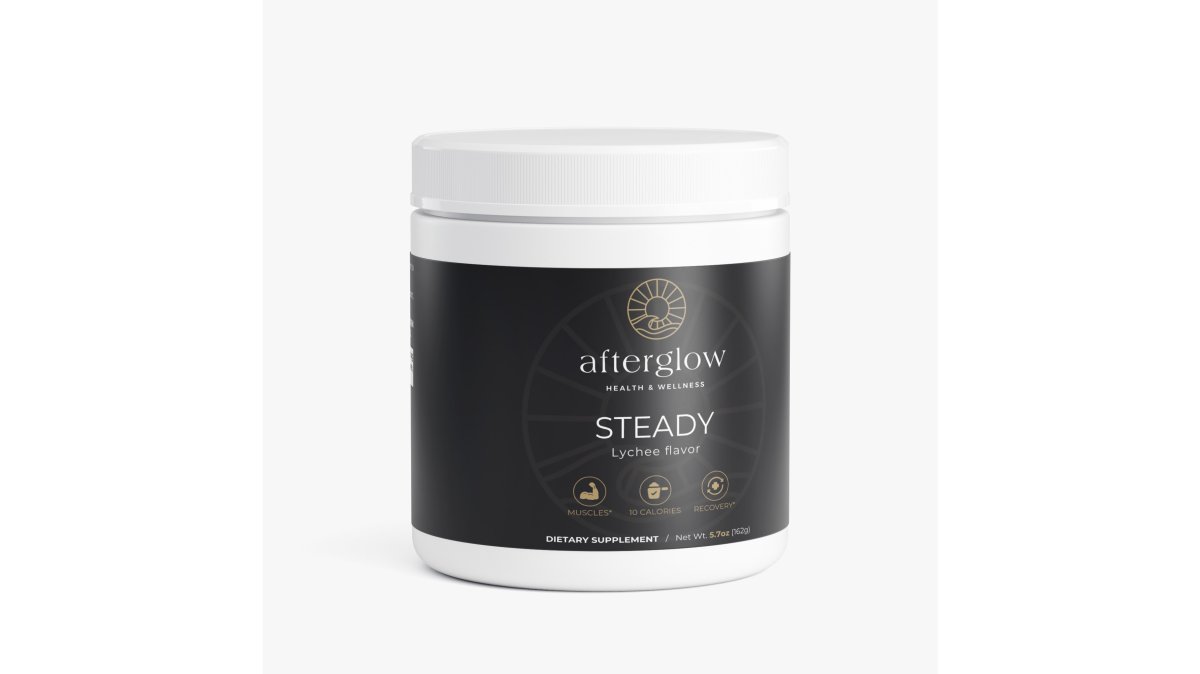
Afterglow's Steady Hydration Powder (Lychee) includes essential electrolytes to keep you hydrated and energized. It contains various nutrients to support overall health, supports muscle function, and enhances endurance. It is caffeine-free and has an uplifting flavor.

Top Afterglow Products for Ozempic Face Support
The system approach matters more than individual products. Hair, Skin and Nails Essentials provides systemic nutrient support. The Skin Firming Cream provides topical support for facial volume loss. The Whey Protein supports muscle preservation and collagen building blocks. The Hydration Powder ensures your cells can actually use the nutrients and water you're providing. Together, they create a comprehensive protocol that accounts for how GLP-1 medications change your body's nutrient needs and absorption capacity.
Conclusion
The best vitamins for ozempic face go beyond treating the symptom, they address the root cause: nutrient depletion and impaired absorption during rapid weight loss on GLP-1 medications. Your skin's ability to maintain elasticity, your hair's ability to stay strong, and your energy levels all depend on specific micronutrients that standard supplements don't deliver in the right amounts or forms for semaglutide users.
Frequently Asked Questions
What is Ozempic face and why does it happen?
Ozempic face refers to visible changes in facial appearance during rapid weight loss on GLP-1 medications like semaglutide. Subcutaneous fat loss in the face occurs quickly, leading to loss of facial volume, sagging skin, and a hollow appearance. This happens because semaglutide suppresses appetite and accelerates fat loss, but the skin's collagen synthesis and elasticity may not keep pace. Nutrient deficiencies from reduced food intake compound this effect, slowing skin renewal and tissue repair.
What vitamins help prevent hair loss and skin laxity on GLP-1 medications?
Biotin, B12, folate, zinc, and vitamin C are important for supporting hair and skin health during weight loss. Biotin supports healthy hair structure and keratin production. B12 and folate support cell division. Zinc and copper work as enzymatic cofactors for collagen formation. Vitamin C promotes collagen formation. The Renew Hair, Skin and Nails Essentials formula ($32.90) combines these nutrients with botanical extracts like Fo-Ti and horsetail.
Can collagen supplements help with sagging skin during weight loss?
Collagen supplements provide amino acids and peptides that support skin renewal, but they work best alongside adequate vitamin C, vitamin D, zinc, and hydration. Collagen synthesis requires vitamin C as a critical cofactor, so taking collagen without sufficient micronutrient support limits its effectiveness. Pairing a collagen-supporting supplement regimen with consistent hydration and protein intake (like Afterglow's Hold Whey Protein at $55.00) maximizes skin elasticity preservation.
Are there specific supplements to support skin health while on Ozempic?
Yes. GLP-1 medications deplete micronutrients through reduced food intake and altered absorption. Targeted supplementation addresses this by providing vitamins A, C, D, and E for antioxidant protection against oxidative stress; B-complex vitamins for metabolic support and energy; zinc and copper for tissue repair and collagen formation; and hyaluronic acid for hydration. Afterglow's system is specifically designed for GLP-1 users, with third-party testing and no proprietary blends, ensuring transparency about what supports your skin during treatment.