

Clean Supplements for Weight Loss: What Actually Works
Table of Contents
- What Makes a Clean Supplement for Weight Loss
- Weight Loss Supplement Ingredients to Avoid
- Third-Party Tested Supplements: Why It Matters
- Best Weight Loss Supplements for Your Needs
- GLP-1 Supplements for Muscle Support During Weight Loss
- How to Choose the Right Clean Supplement for You
- Realistic Expectations: What Clean Supplements Can and Cannot Do
- Frequently Asked Questions
Last Updated: October 5, 2026
What Makes a Clean Supplement for Weight Loss
When you're shopping for clean supplements weight loss, the label tells only part of the story. A clean supplement starts with what's NOT in the bottle: no artificial dyes, no proprietary blends hiding ingredient doses, no unnecessary fillers. It means full transparency about what you're taking and why.
Clean supplements for weight loss prioritize ingredient quality and verification. That means third-party testing to confirm purity and potency, manufacturing in FDA-registered facilities that follow Good Manufacturing Practices (GMP), and clear disclosure of every active ingredient with its dose listed. Many brands skip these steps to cut costs. The ones that don't stand out immediately.
What separates a truly clean supplement from marketing hype is accountability. When a brand lists 500 mg of an ingredient, you should be able to verify that's actually what's in the capsule. When they claim digestive support, the formula should contain proven ingredients like probiotics, digestive enzymes, and botanical extracts in meaningful amounts, not trace quantities that look good on paper.
The supplement industry doesn't require pre-market approval like pharmaceuticals do, which means quality varies wildly. Some manufacturers cut corners on testing. Others use synthetic versions of nutrients when bioavailable alternatives exist. A clean supplement maker chooses the harder path: investing in quality verification, transparent sourcing, and formulas designed for real results rather than lowest-cost production.
Weight Loss Supplement Ingredients to Avoid
Not all ingredients are created equal, and some add nothing but cost and potential side effects to your regimen.
Proprietary blends are the first red flag. When a label says "Metabolism Boost Blend: 1,200 mg," you have no idea whether that's 1,000 mg of filler and 200 mg of the active ingredient, or the reverse. Transparent brands list each ingredient separately with its dose. You deserve to know exactly what you're taking.
Artificial dyes and synthetic colorants serve no nutritional purpose. They're added purely for visual appeal, yet they introduce chemicals your body doesn't need. Look for supplements colored naturally, or accept that a capsule might be beige instead of bright blue.
Added sugars and unnecessary sweeteners belong in dessert, not supplements. Some weight loss formulas include sugar to improve taste, which directly contradicts the weight loss goal. Others use artificial sweeteners that some people tolerate poorly. A clean formula uses stevia or monk fruit extract, or skips sweetening entirely if the formula is a capsule.
Excessive fillers and binders inflate serving sizes without adding benefit. Microcrystalline cellulose in small amounts aids capsule integrity. But when it comprises 40% of the formula, you're paying for bulk, not nutrition. Compare ingredient lists side by side: the shorter the filler list, the more concentrated the active ingredients.
Ingredients without dose transparency are impossible to evaluate. If a label lists "Green Tea Extract" without specifying the amount or the EGCG content, you can't assess whether it's a therapeutic dose or homeopathic window dressing. Clean supplements spell out doses so you can compare across brands.
Third-Party Tested Supplements: Why It Matters
Third-party testing is the verification step most brands skip because it costs money and sometimes reveals problems.
When an independent lab tests a supplement, they confirm three things: the ingredients listed are actually in the bottle, they're present in the amounts claimed, and no contaminants like heavy metals or microbial pathogens are present. A brand that undergoes this testing has nothing to hide. One that doesn't is banking on you not asking questions.
The testing organizations that matter are NSF Certified for Sport, USP Verified, or ConsumerLab. These labs maintain standards that exceed regulatory minimums. They publish results publicly, so you can verify the claim yourself rather than trusting marketing language.
Many brands conduct in-house testing only, which is like grading your own homework. It's not fraud, but it's not independent verification either. Third-party testing costs brands between $500 and $2,000 per product batch, which is why budget brands avoid it. That cost difference shows up in the price you pay, but it also shows up in confidence that what you're buying is what's on the label.
Without third-party testing, you're relying on a manufacturer's word. That might be fine if the brand has a reputation to protect. But in an industry where new companies launch monthly with minimal oversight, third-party certification is your assurance that you're not wasting money on an underdosed formula or, worse, exposing yourself to contaminants.
Best Weight Loss Supplements for Your Needs
The right supplement depends on what your body actually needs during weight loss.
Digestive Support and Nutrient Absorption
Rapid weight loss often comes with digestive discomfort. Reduced food intake, changes in meal timing, and the stress on your system can leave you feeling bloated, constipated, or nauseous. A formula addressing this combines probiotics, digestive enzymes, and botanical support.
Afterglow's Ease: GLP-1 Support is formulated specifically for this scenario. At $60 per bottle, it includes magnesium, probiotics, digestive enzymes, and botanical extracts like ginger and peppermint to support overall digestive function and comfort. The formula also supplies methylated and bioactive nutrients, including vitamin B12 (methylcobalamin), folate (5-MTHF), vitamin B6 (P5P), along with zinc, iron, biotin, and vitamin D3. Black pepper extract is also included to help support nutrient bioavailability and absorption.

What matters here is dose transparency. The formula lists 200 mg of magnesium and 20 mg of zinc rather than hiding these in a proprietary blend.
Protein and Muscle Preservation
During weight loss, your body breaks down muscle alongside fat (pubmed.ncbi.nlm.nih.gov). Adequate protein intake slows this process, but whole food alone often isn't enough when appetite is suppressed or meal frequency drops.
Afterglow's Hold Performance Whey Protein Blend comes in Chocolate and Vanilla, each at $55 per container. Each serving delivers 22 grams of protein from whey protein isolate and concentrate, providing all essential amino acids your muscles need for maintenance and recovery. The formula includes resistant potato starch as a fiber source, which supports satiety and digestive health. It's sweetened with stevia leaf extract, not sugar or artificial sweeteners, keeping calories low while maintaining palatability.
The practical advantage: a single shake makes it easier to hit protein targets when eating smaller meals. Post-workout or between meals, it helps support muscle maintenance and normal recovery.
| Protein Source | Grams per Serving | Calories | Key Benefit |
|---|---|---|---|
| Hold Whey Protein | 22g | ~150 | Complete amino acid profile |
| Typical chicken breast | 26g | ~165 | Whole food alternative |
| Greek yogurt | 15g | ~100 | Includes probiotics |
GLP-1 Supplements for Muscle Support During Weight Loss
If you're using semaglutide, tirzepatide, or another GLP-1 medication, your body faces unique nutritional demands. These medications suppress appetite dramatically, which means smaller total food intake and higher risk of micronutrient deficiency and muscle loss (Checking your browser).
Standard multivitamins don't address this. The vitamins and minerals must be in bioavailable forms your body can actually absorb and use.
Afterglow's entire system is built around this reality. The founder created the line after her own GLP-1 journey. Ease supports digestion and micronutrient intake. Hold preserves muscle mass. The approach is systematic rather than piecemeal.
How to Choose the Right Clean Supplement for You
Start by identifying your actual need when choosing clean supplements weight loss, not what marketing tells you that you need.
Are you struggling with nausea or constipation? Digestive support becomes the priority. Are you losing muscle visibly? Protein intake is the lever to pull. Are you fatigued despite adequate sleep? Micronutrient deficiency, particularly B vitamins and iron, often explains this.
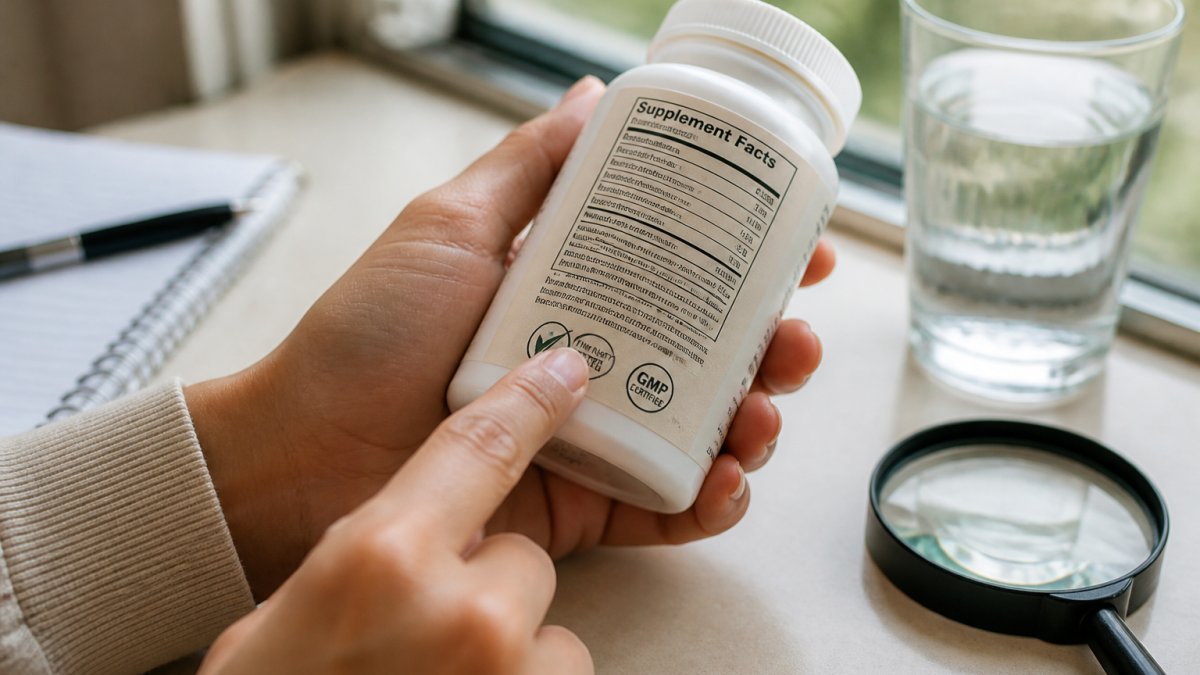
Check the ingredient list before the price. A $30 supplement with hidden doses in a proprietary blend is more expensive than a $60 formula with transparent, therapeutic doses. Compare the actual amounts of key ingredients across brands.
Verify third-party testing. Look for NSF Certified for Sport, USP Verified, or ConsumerLab seals. These certifications cost brands money, which is exactly why you should expect to see them on clean supplements.
Read customer feedback specifically about results, not just taste or convenience. Did people report reduced bloating? Better energy? Visible improvement in hair or skin?
Check the manufacturing facility. FDA-registered facilities that follow GMP standards maintain quality control that smaller or unregistered manufacturers often skip. This information should be on the label or company website without requiring you to dig.
Avoid brands that make disease claims. If a supplement claims to "cure" or "treat" a condition, it's making illegal pharmaceutical claims. Clean supplements support normal function and address nutritional gaps. They don't promise to fix medical conditions, which is both more honest and legally compliant.
Realistic Expectations: What Clean Supplements Can and Cannot Do
Clean supplements support your body's natural processes. They don't create weight loss on their own.
A protein supplement helps preserve muscle during calorie restriction, but only when combined with resistance training and adequate total protein intake. A digestive support formula eases discomfort and improves nutrient absorption, but it doesn't speed metabolism or burn fat. A micronutrient formula addresses deficiency and supports energy production, but it doesn't replace calories or suppress appetite.
Weight loss supplements work best as part of a system: calorie deficit through diet, movement through exercise, sleep quality, and stress management. Add a clean supplement to that foundation, and it fills gaps the diet alone can't cover. Use it as a substitute for the foundation itself, and you'll be disappointed.
Results take time. Digestive comfort often improves within days, but other benefits require patience.
Your results depend on your adherence and your starting point.
Clean supplements are more expensive than cheap alternatives because third-party testing, transparent dosing, and quality manufacturing cost more. That price difference is worth it for assurance that you're getting what you paid for, not underdosed fillers. But it's not worth it if you're not actually deficient in the nutrients the supplement provides.
Choosing clean supplements for weight loss comes down to three things: transparency about what's in the bottle, verification that it's actually there, and realistic expectations about what it can do. If you're experiencing digestive discomfort, muscle loss, or micronutrient deficiency during your weight loss journey, shop the collection and find the formulas that match your actual needs.
Frequently Asked Questions
What ingredients should you avoid in weight loss supplements?
Avoid supplements with undisclosed proprietary blends, artificial dyes, excessive added sugars, and stimulants like synephrine or DMAA. Look for products with transparent ingredient lists and clear dosages. Clean supplements list every active ingredient with its amount, so you know exactly what you're taking. Many cheaper options hide ingredient quantities behind 'proprietary blends,' making it impossible to evaluate safety or efficacy.
How can you tell whether a weight loss supplement is safe and high quality?
Check for third-party testing from organizations that verify purity and potency. Look for FDA-registered and GMP-certified manufacturing facilities on the label. Review the full ingredient list, not a proprietary blend, and verify each ingredient has clinical support. Transparent brands disclose testing results and manufacturing standards. Afterglow supplements are third-party tested for purity and potency and manufactured in FDA-registered, GMP-certified facilities, meeting these quality standards.
Do weight loss supplements actually work?
Supplements work best as part of a comprehensive approach that includes healthy eating and physical activity. Individual ingredients like green tea extract, cayenne pepper, and ginger have research supporting their role in metabolism and fat burning, but results are modest. Realistic expectations matter: supplements support your weight loss journey but don't replace diet and exercise. Products addressing specific side effects, like digestive support during rapid weight loss, show more consistent results than general fat-burning claims.
Should you ask a doctor before taking supplements while using a GLP-1 medication?
Yes. Always consult your healthcare provider before starting any supplement regimen, especially while taking GLP-1 medications like semaglutide or tirzepatide. Some supplements may interact with medications or affect nutrient absorption. Your doctor can review your specific health situation and confirm whether targeted supplements for muscle support, digestive comfort, or micronutrient replenishment are appropriate for you.