

Support Gut Health During Weight Loss: A Guide
Table of Contents
- Understanding the Link Between Gut Health and Weight Loss
- GLP-1 Side Effects and Gut Health: What You Need to Know
- Foods for Gut Health During Weight Loss
- How to Maintain Muscle Mass During Rapid Weight Loss
- Probiotics, Prebiotics, and Dietary Fiber: Your Gut's Best Friends
- Stress, Sleep, and Gut Microbiome: The Missing Pieces
- Your Action Plan: Supporting Gut Health While Losing Weight
- Conclusion
- Frequently Asked Questions
Last Updated: October 2, 2026
Understanding the Link Between Gut Health and Weight Loss
The gut microbiome, the trillions of bacteria living in your digestive system, plays a far more significant role in gut health weight loss than most people realize. When you're losing weight, especially rapidly, your gut flora undergoes major changes that can either support or sabotage your progress.
Your gut bacteria influence how your body extracts calories from food, regulates hunger hormones, and maintains metabolic health. A diverse, balanced gut microbiome promotes better caloric absorption efficiency, reduces inflammation, and supports the production of short-chain fatty acids that fuel your metabolism.
The challenge: rapid weight loss often damages microbial diversity. Fewer calories mean less food for your bacteria to ferment, which can lead to dysbiosis (bacterial imbalance), increased intestinal permeability, and the digestive discomfort many people experience during weight loss. This is why supporting gut health weight loss isn't optional, it's foundational to feeling good and maintaining the results you've worked for.
GLP-1 Side Effects and Gut Health: What You Need to Know
GLP-1 medications like semaglutide and tirzepatide have transformed weight loss outcomes for millions, but they come with a trade-off: significant gastrointestinal side effects that directly impact gut health.
GLP-1 agonists slow gastric emptying, meaning food moves more slowly through your stomach and intestines. This reduced transit time changes the feeding patterns of your gut bacteria, which can trigger nausea, bloating, constipation, and cramping.
Many people on GLP-1 medications also experience reduced appetite for protein-rich foods, which can worsen the problem.
The solution isn't to stop the medication, it's to be intentional about what you eat and how you support your gut during treatment. Products like Afterglow's Ease formula are specifically designed to address these dynamics, combining probiotics, digestive enzymes, and botanical support to help maintain digestive comfort while on GLP-1 therapy.

Foods for Gut Health During Weight Loss
What you eat matters far more than how little you eat when it comes to protecting your gut microbiome.
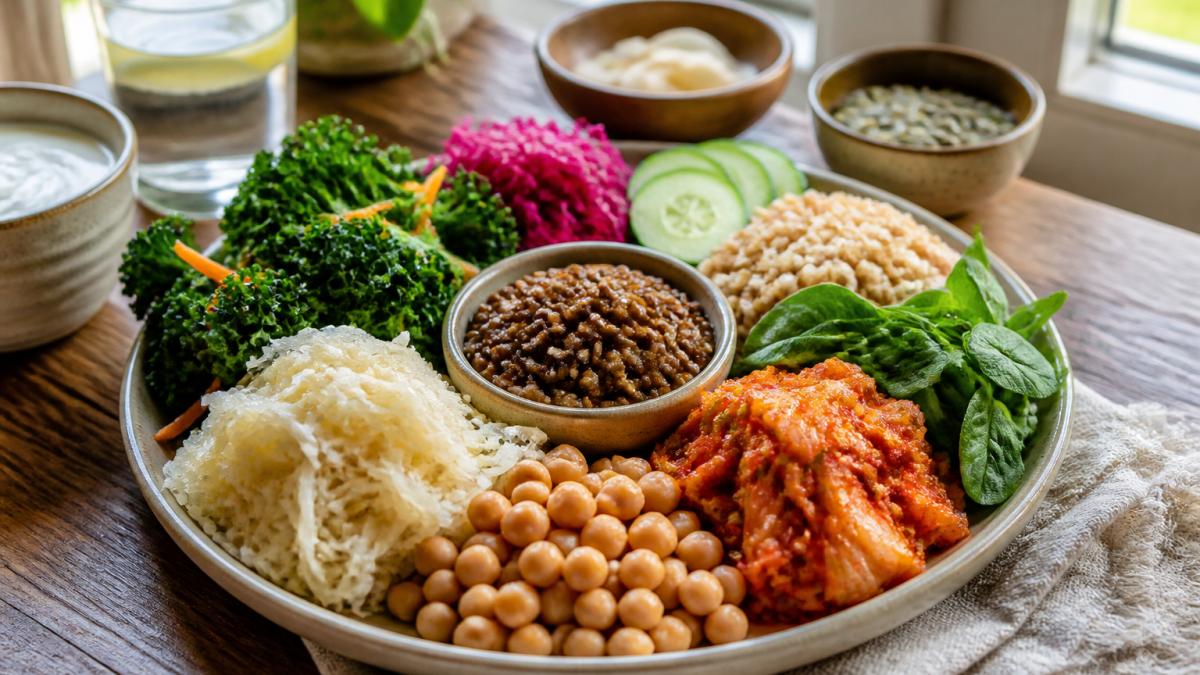
Fermented foods should be a cornerstone of any gut-health-focused weight loss plan. Sauerkraut, kimchi, miso, tempeh, and unsweetened yogurt contain live probiotics that directly seed your gut with beneficial bacteria.
Dietary fiber is non-negotiable.
Prebiotic foods like garlic, onions, asparagus, and bananas contain compounds that specifically feed beneficial bacteria. These foods don't provide calories your body can easily digest, the bacteria get them instead.
Protein sources matter. Fish, eggs, and plant-based proteins like lentils support both muscle preservation and a healthy microbiome. Aim for 25-30 grams of protein per meal, even if your appetite is suppressed. If solid food is difficult on GLP-1 medication, Afterglow's Hold Performance Whey Protein provides 22 grams per serving in an easy-to-digest format.

| Food Category | Best Options | Why They Matter |
|---|---|---|
| Fermented | Sauerkraut, kimchi, miso, yogurt | Live probiotics seed beneficial bacteria |
| Fiber | Oats, legumes, ground flaxseed | Feeds good bacteria, produces short-chain fatty acids |
| Prebiotic | Garlic, onions, asparagus, bananas | Specifically nourishes beneficial microbes |
| Protein | Fish, eggs, lentils, whey | Supports muscle and microbial diversity |
How to Maintain Muscle Mass During Rapid Weight Loss
Rapid weight loss without intentional muscle preservation can cost you 25-30% of your losses in lean tissue.
Muscle preservation during weight loss depends on three factors: adequate protein intake, resistance training, and sufficient micronutrient support. On GLP-1 medication, all three become harder.
Protein is the foundation. Aim for at least 0.8 grams per pound of your goal body weight daily, more if you're training. If you're eating 1,200-1,500 calories daily on GLP-1 medication, that protein target becomes challenging. This is where supplementation becomes practical. A single serving of whey protein shake provides 22 grams of protein with minimal volume, making it easier to hit your targets when whole foods feel overwhelming.
Resistance training doesn't need to be intense. Three 30-minute sessions per week focusing on compound movements (squats, deadlifts, rows, presses) signal your body to preserve muscle.
Micronutrient support matters more during rapid weight loss because you're consuming fewer calories overall. Iron, zinc, B vitamins, and magnesium all influence muscle protein synthesis.
Probiotics, Prebiotics, and Dietary Fiber: Your Gut's Best Friends
These three categories work synergistically to restore and maintain a healthy microbiome during weight loss.
Probiotics are live beneficial bacteria.
Prebiotics are food components that your body can't digest but your good bacteria thrive on. They're essentially fertilizer for the microbiome you already have.
Dietary fiber serves both roles. It feeds your bacteria while also supporting digestive motility, critical on GLP-1 medication where constipation is common.
The mistake most people make: they supplement with probiotics but don't feed them. A probiotic without prebiotic and fiber support is like planting seeds in concrete.
Afterglow's Ease formula integrates these principles, combining probiotics with digestive enzymes and botanical support to address the specific challenges of maintaining gut health during GLP-1 treatment.
Stress, Sleep, and Gut Microbiome: The Missing Pieces
Most weight loss guides focus on diet and exercise, completely overlooking the fact that stress and sleep quality directly reshape your gut microbiome.
Chronic stress elevates cortisol, which increases intestinal permeability (leaky gut), promotes inflammation, and shifts your bacterial composition toward less diverse, less healthy strains. Sleep deprivation has similar effects.
The practical fix: prioritize 7-9 hours of sleep nightly and implement basic stress management. This doesn't require meditation or expensive wellness programs.
On GLP-1 medication, sleep quality often suffers due to nausea, medication timing, or anxiety about weight loss progress.
Your Action Plan: Supporting Gut Health While Losing Weight
Transform these principles into a practical daily routine. The goal isn't perfection, it's consistency and strategic support where it matters most.
Week 1-2: Foundation Start with dietary changes before adding supplements. Add one fermented food daily (sauerkraut, kimchi, or yogurt). Increase fiber gradually to 25-30 grams daily, spreading it across meals to minimize bloating.
Week 3-4: Microbiome Support Introduce a multi-strain probiotic supplement. Add prebiotic foods like garlic, onions, and asparagus to meals. If digestive discomfort persists on GLP-1 medication, consider Afterglow's Ease formula, which combines probiotics, digestive enzymes, and botanical support in a single product designed for GLP-1 users.
Ongoing: Lifestyle Integration Maintain 7-9 hours of sleep nightly. Implement one stress management practice daily (walking, time outside, or breathing exercises). Continue resistance training 3 times weekly for muscle preservation.
| Phase | Action | Duration | Expected Outcome |
|---|---|---|---|
| Foundation | Add fermented foods, increase fiber, prioritize protein | 2 weeks | Reduced bloating, improved digestion |
| Support | Introduce probiotics and prebiotics | 2 weeks | Better energy, improved regularity |
| Maintenance | Integrate lifestyle habits, continue supplementation | Ongoing | Sustained gut health, easier weight maintenance |
Conclusion
Supporting gut health during weight loss isn't a luxury, it's the difference between a sustainable transformation and a cycle of weight regain, digestive problems, and metabolic damage. Your microbiome influences how efficiently your body extracts energy, regulates hunger, and maintains the weight you've lost. Protecting it requires intentional food choices, targeted supplementation, and lifestyle consistency.
If you're on GLP-1 medication or experiencing rapid weight loss, your gut needs more support than standard multivitamins provide. Afterglow's system of formulas, including Ease for digestive support and Hold Performance Protein for muscle preservation, addresses the specific nutritional gaps created by weight loss medication. Third-party tested and formulated in FDA-registered, GMP-certified facilities, Afterglow products are designed by someone who's lived this journey. Shop the collection and give your gut the support it deserves.
Frequently Asked Questions
Does gut health affect how fast you lose weight?
Yes. Your gut microbiome influences how your body extracts and absorbs calories from food. A diverse, healthy gut flora supports better metabolic function and nutrient absorption, which can help optimize your weight loss results. During rapid weight loss, maintaining microbial diversity becomes even more important to prevent metabolic slowdown and preserve digestive comfort.
What are the signs of poor gut health during weight loss?
Common signs include persistent bloating, irregular digestion, fatigue, nutrient deficiencies (hair loss, weak nails, dry skin), and difficulty maintaining muscle mass. If you're experiencing these while losing weight, your gut may need targeted support. Adding probiotics, increasing fiber gradually, and ensuring adequate protein intake can help restore balance.
How do GLP-1 medications impact the gut microbiome?
GLP-1 medications slow gastric emptying and reduce appetite, which changes how food moves through your digestive system and alters nutrient intake patterns. This shift can reduce the diversity of your gut bacteria if not managed intentionally. Supporting your gut with digestive enzymes, probiotics, and adequate fiber helps maintain bacterial balance and reduces common side effects like nausea and constipation.
Can I maintain muscle mass while supporting my gut during weight loss?
Absolutely. The key is combining adequate protein intake (aim for 0.7-1 gram per pound of body weight daily), resistance exercise, and digestive support. Protein powders with digestive enzymes and probiotics, like those designed for GLP-1 users, make it easier to meet protein goals without overwhelming your digestive system. This combination preserves muscle while keeping your gut comfortable.
How quickly will I see results from gut health supplements?
Digestive comfort typically improves within 1-2 weeks as probiotics and enzymes begin supporting nutrient absorption. Hair, skin, and energy improvements usually take 6-8 weeks of consistent use, as these depend on sustained nutrient absorption and microbial balance. Patience and consistency matter more than speed, quality supplements formulated for GLP-1 users deliver better results over time.
Are gut health supplements safe to take with GLP-1 medications?
Yes, when chosen carefully. Probiotics, digestive enzymes, and fiber supplements are generally safe alongside semaglutide and tirzepatide. However, always consult your prescribing doctor before adding any supplement regimen.