

How to Manage Nausea on GLP-1: 7 Practical Strategies
Table of Contents
- Why GLP-1 Medications Cause Nausea
- Start With a Low Dose and Titrate Gradually
- Foods to Avoid on Semaglutide and Other GLP-1s
- Eat Smaller, Frequent Meals and Manage Meal Timing
- Hydration Strategies to Reduce Nausea
- How Long Does GLP-1 Nausea Last
- Best Supplements for GLP-1 Side Effects
- When to Contact Your Healthcare Provider
- Frequently Asked Questions
Last Updated: September 27, 2026
Why GLP-1 Medications Cause Nausea
GLP-1 medications like semaglutide and tirzepatide work by slowing gastric emptying, the rate at which food moves from your stomach into your small intestine. This slower digestive process helps you feel full longer, which supports weight loss. But it also triggers nausea in many people, especially during the first few weeks of treatment.
Nausea occurs as your stomach adjusts to a new digestive pace. For some people it's mild; for others, it significantly affects daily life.
The good news: you can manage nausea on GLP-1 medications effectively. Most people see improvement within 4-8 weeks as their body adapts. In the meantime, specific strategies can reduce how much nausea you experience.
Start With a Low Dose and Titrate Gradually
The single biggest mistake people make is starting too high. Your body needs time to adjust to how GLP-1 medications change your digestion.
Titration, starting low and gradually increasing over weeks, is standard for semaglutide, tirzepatide, and other GLP-1s. It gives your body time to adapt, reduces nausea intensity, and lets your provider monitor your response.
Most titration schedules work like this:
- Week 1-4: Start at the lowest dose (often 0.25 mg for semaglutide)
- Week 5-8: Move to the next dose level
- Week 9+: Continue stepping up as tolerated
If nausea is severe, tell your doctor. Many people stay at a lower dose longer before moving up. A slower titration schedule often produces better results than pushing through severe side effects.
Foods to Avoid on Semaglutide and Other GLP-1s
Fatty, spicy, and fried foods sit in your stomach longer due to slowed gastric emptying, triggering more nausea.
Foods that commonly trigger nausea:
- High-fat foods (butter, oils, fatty meats, cream sauces)
- Fried foods (chips, fried chicken, French fries)
- Spicy foods (hot peppers, curry, sriracha)
- Greasy fast food
- Rich desserts and pastries
- Sugary drinks and sweets
- Alcohol (especially on an empty stomach)
- Caffeine in large amounts
During the adjustment phase, avoiding these foods reduces nausea significantly.
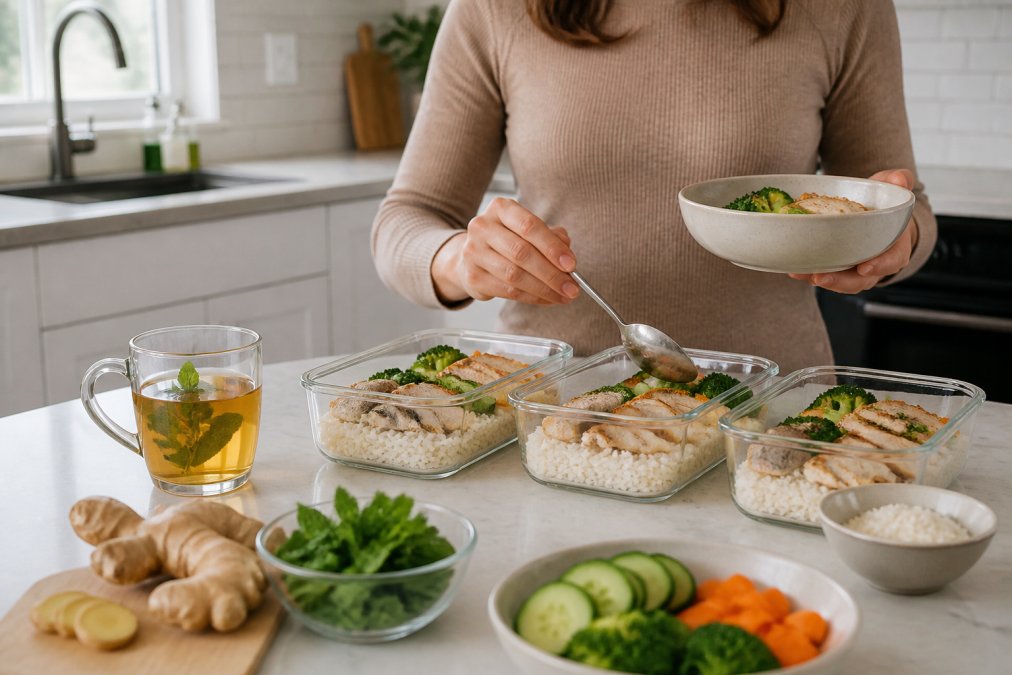
What to eat instead:
- Lean proteins (chicken breast, fish, turkey, tofu)
- Plain rice and pasta
- Bland vegetables (carrots, green beans, zucchini)
- Oatmeal and whole grains
- Ginger and peppermint (natural nausea fighters)
- Broth-based soups
- Bananas and applesauce
Bland, low-fat, easy-to-digest foods move through your system faster and cause less nausea while maintaining nutrition.
Eat Smaller, Frequent Meals and Manage Meal Timing
Smaller portions reduce nausea. Try five or six small meals (roughly fist-sized, 150-200 calories each) throughout the day instead of three large meals.
Meal timing strategies:
- Eat every 2-3 hours instead of waiting for traditional meal times
- Never skip breakfast (an empty stomach can trigger nausea)
- Eat slowly and chew thoroughly, aim for 20-30 chews per bite to signal your brain that food is coming
- Stop eating when you feel 70% full, not stuffed
- Wait 30 minutes after eating before lying down
Eating at consistent times helps your stomach adapt better.
If nauseous before a meal, try a small snack of crackers or broth instead of forcing a full meal.
Some people report less nausea when injecting in the evening rather than morning, ask your provider what timing works best for you.
Non-pharmacological sensory techniques to pair with meal timing:
While diet is foundational, research supports several sensory and physical techniques that reduce nausea perception when used alongside smaller meals. These work best before nausea peaks, not after.
Acupressure at the P6 point (Neiguan): Located on your inner forearm two finger-widths below your wrist crease, firm circular pressure here for 2-3 minutes reduces nausea intensity. Studies show it works for medication-induced nausea. Apply pressure when nausea first rises, not after it's severe.
Peppermint and ginger aromatherapy: Peppermint oil reduces nausea perception in clinical settings, inhale for 30-60 seconds when nausea begins. Ginger tea or candies provide both scent and gingerol (anti-inflammatory), with no contraindications to GLP-1 drugs.
Controlled breathing: Try box breathing (inhale 4 counts, hold 4, exhale 4, hold 4, repeat 5-10 times) to activate your parasympathetic nervous system and reduce nausea. Works best 15-20 minutes before meals.
Cold water or ice chips: The cold sensation interrupts nausea signals by engaging different nerve pathways. Useful between meals when you can't eat solid food.
Positioning and movement: Stay upright or recline at 30-45 degrees for 30 minutes after eating.
Hydration Strategies to Reduce Nausea
Dehydration worsens nausea. On GLP-1 medications, your body needs more water because you're eating less food.
Hydration best practices:
- Drink 8-10 glasses of water daily, spread throughout the day
- Sip water slowly instead of drinking large amounts at once
- Avoid drinking large volumes right before or after meals
- Add electrolytes to your water (sodium, potassium, magnesium)
- Try hydration powders designed for electrolyte balance
How Long Does GLP-1 Nausea Last
Most people experience nausea for 2-4 weeks after starting GLP-1 medications. Some feel better within days. Others take 6-8 weeks to fully adjust. But the timeline is only part of the story, what matters more is understanding why it varies and how to manage the psychological weight of waiting.
The timeline depends on:
- How quickly you titrate your dose
- Your individual body chemistry
- Whether you follow dietary adjustments
- Your baseline sensitivity to medication changes
- Stress levels and sleep quality (both worsen nausea perception)
- Whether you're managing triggers proactively or reactively
What to expect by week:
- Week 1-2: Nausea is usually most intense. This is when many people feel discouraged and question whether treatment is worth it. This is normal. Your body is in acute adjustment.
- Week 3-4: Nausea often improves noticeably, though it may still spike with certain foods or stress. Many people report a psychological shift here, the side effect feels less overwhelming.
- Week 5-8: Most people feel significantly better. Nausea becomes occasional rather than constant. Energy and appetite stabilize.
- Beyond 8 weeks: Persistent nausea is less common and worth discussing with your doctor.
Practical strategies for the waiting period:
- Set a specific "reassessment date" (e.g., 4 weeks in) rather than waiting indefinitely. Knowing you'll evaluate progress on a set date reduces the psychological burden of open-ended suffering.
- Track improvements you can see beyond nausea: energy levels, hunger cues, mood, sleep quality. These often improve before nausea fully resolves, providing psychological wins.
- Connect with others on GLP-1 medications. Hearing that others experienced similar timelines normalizes the experience and reduces isolation.
- Plan one small thing you'll do once nausea improves (a meal you're craving, an activity you've postponed). Having something to look forward to helps you endure the adjustment phase.
Best Supplements for GLP-1 Side Effects
While managing nausea, your body also faces other challenges from rapid weight loss and reduced food intake. You're getting fewer calories, which means fewer nutrients. Muscle loss, hair thinning, and skin changes are common.
Key nutrients to support:
- Digestive health: Probiotics, digestive enzymes, ginger, peppermint
- Electrolytes: Sodium, potassium, magnesium
- Protein and amino acids: Support muscle preservation
- B vitamins: Energy production and metabolism
- Hair, skin, and nails: Biotin, collagen, zinc
When to Contact Your Healthcare Provider
Nausea from GLP-1 medications is normal. Severe, persistent nausea is not.
Contact your doctor if:
- Nausea persists beyond 8 weeks despite dietary changes
- You're vomiting multiple times per day
- You can't keep food or water down
- You're losing weight too quickly (more than 2-3 pounds per week)
- You feel dizzy, weak, or confused
- You have signs of dehydration (dark urine, extreme thirst, dizziness)
- You experience severe abdominal pain
- Nausea suddenly worsens after improving
Frequently Asked Questions
Why does semaglutide cause nausea?
Semaglutide and other GLP-1 medications slow gastric emptying, the rate at which food moves from your stomach into your small intestine. This slower digestion triggers nausea signals in your brain. The effect is strongest when you start the medication or increase your dose. As your body adapts over weeks to months, nausea typically improves. Titration (starting with a low dose and increasing gradually) helps your system adjust with fewer side effects.
How long does nausea last when starting a GLP-1?
Most people experience nausea for 2-4 weeks after starting or increasing their GLP-1 dose. For some, it resolves within days; for others, it may persist for 6-8 weeks. The timeline depends on your individual response, dosage, and how quickly you titrate. Taking your dose at night, eating smaller meals, and staying hydrated can speed symptom resolution. If nausea persists beyond 8 weeks or worsens, contact your healthcare provider.
What's the difference between Afterglow supplements and standard multivitamins for GLP-1 users?
Standard multivitamins are designed for general health, not for the specific challenges GLP-1 users face. Afterglow's system targets muscle, gut, hydration, hair, and skin health to address common side effects experienced during and after weight loss journeys. Ease includes digestive enzymes, probiotics, ginger, and peppermint to support overall digestive function and comfort. Steady provides essential electrolytes for hydration. Each formula is third-party tested and made in FDA-registered, GMP-certified facilities.
Are Afterglow supplements safe to take alongside semaglutide or tirzepatide?
Yes. Afterglow formulas are designed to complement GLP-1 medications, not interfere with them. Ease contains digestive support ingredients (ginger, peppermint, probiotics, digestive enzymes) that work with your medication to ease nausea and support nutrient absorption. Steady provides electrolytes without stimulants or ingredients that conflict with GLP-1 therapy. Always mention any new supplements to your healthcare provider, but these formulas are formulated with GLP-1 users in mind and do not contraindicate semaglutide, tirzepatide, or other GLP-1 medications.