

Supplements for GLP-1 Nausea Relief: What Works
Table of Contents
- Understanding GLP-1 Nausea and Gastrointestinal Side Effects
- Ginger for GLP-1 Nausea: Evidence and Dosage
- Best Probiotics for GLP-1 Side Effects and Gut Health
- Key Vitamins and Minerals to Support Nutrient Absorption
- Drug-Supplement Interactions and Safety Considerations
- Vitamin Shoppe vs GNC Supplements: Quality and Transparency
- Building Your Supplement Routine: Timing and Implementation
- When to Consult Your Healthcare Provider
- Frequently Asked Questions
Last Updated: September 20, 2026
Understanding GLP-1 Nausea and Gastrointestinal Side Effects
GLP-1 medications like semaglutide and tirzepatide work by slowing gastric emptying and signaling satiety to the brain. This mechanism is effective for weight loss and blood glucose regulation, but it comes with a trade-off: gastrointestinal distress is one of the most common side effects users experience. Nausea, vomiting, and abdominal discomfort affect many patients, particularly during the titration schedule when doses increase weekly.
The good news is that supplements for GLP-1 nausea relief can meaningfully reduce these symptoms when chosen strategically. The challenge is knowing which ones actually work, how they interact with your medication, and when they're worth adding to your routine.
Our specialized formulas address the specific nutritional gaps and digestive challenges that emerge during rapid weight loss. This guide walks you through the evidence-based supplements that can ease your transition and support your long-term health on GLP-1 therapy.
Delayed gastric emptying isn't the only issue. GLP-1 users often struggle with nutrient absorption due to reduced food intake and faster transit times through the digestive system. This creates a double problem: your body needs more micronutrient support at precisely the moment it's absorbing less food. Supplementation becomes not optional but essential for preserving muscle, skin, and hair health during weight loss.
Ginger for GLP-1 Nausea: Evidence and Dosage
Ginger has been used for centuries to manage nausea, and the science backs this traditional approach. Gingerol compounds in ginger root work through multiple mechanisms: they enhance gastric motility, reduce inflammatory markers in the gut, and interact with serotonin receptors involved in nausea signaling. For GLP-1 users specifically, ginger addresses the core problem without interfering with your medication's mechanism.
The effective dosage for nausea relief typically ranges from 1,000 to 2,000 mg of dried ginger daily, divided into two or three doses. Timing matters: taking ginger 30 minutes before meals or when nausea begins produces faster relief than waiting until symptoms peak. Fresh ginger tea works, but standardized extracts with documented gingerol content offer more consistent results.
One practical consideration: ginger can thin blood slightly, so if you're on anticoagulants, check with your prescribing physician before adding high-dose supplements. For most GLP-1 users without bleeding disorders, ginger is well-tolerated.
Peppermint oil complements ginger well. The menthol in peppermint relaxes smooth muscle in the digestive tract, reducing cramping and promoting more normal gut motility.
Best Probiotics for GLP-1 Side Effects and Gut Health
Your microbiome changes dramatically on GLP-1 therapy. Reduced food intake and altered gastric pH shift the bacterial populations in your gut. This dysbiosis contributes to bloating, gas, and unpredictable bowel movements that many patients report.
Probiotics restore microbial diversity and support the production of short-chain fatty acids that feed your gut lining. Specifically, Lactobacillus and Bifidobacterium strains have the strongest evidence for reducing gastrointestinal distress. Look for products containing at least 10 billion CFU (colony-forming units) per serving, with multiple species rather than a single strain.
Timing is critical. Take probiotics with food, ideally with your largest meal of the day when stomach acid is diluted by food. Taking them on an empty stomach or with your GLP-1 injection reduces their survival rate in the digestive tract.
One often-overlooked factor: prebiotic fiber feeds your beneficial bacteria. Inulin, partially hydrolyzed guar gum, and resistant starch all support probiotic colonization. However, introduce prebiotics gradually on GLP-1 therapy, too much too fast can cause bloating as your microbiome adjusts. Start with 2 to 3 grams daily and increase by 1 gram weekly.
The Ease formula from Afterglow includes both probiotics and digestive enzymes, plus magnesium and ginger to address multiple layers of GLP-1 side effects simultaneously.

Key Vitamins and Minerals to Support Nutrient Absorption
Rapid weight loss creates acute micronutrient deficiencies even in people who eat well. Your reduced food volume means you're consuming fewer calories and fewer total nutrients, regardless of food quality. This is where targeted supplementation prevents long-term damage to hair, skin, muscle, and bone.
Vitamin B12 deserves special attention. GLP-1 users absorb less B12 from food because reduced stomach acid and faster transit time both impair absorption. Methylcobalamin (the active form) is superior to cyanocobalamin for bioavailability. Aim for at least 500 mcg daily, and consider 1,000 to 2,000 mcg if you're experiencing brain fog or fatigue, both common signs of B12 depletion.
Iron and folate follow similar patterns. Your iron needs don't decrease on GLP-1 therapy, but your absorption does. Ferrous bisglycinate chelate is the most absorbable form. Pair it with vitamin C to enhance absorption, and take it separately from calcium and magnesium, which compete for absorption.
Magnesium supports both digestive function and muscle preservation during rapid weight loss. Many GLP-1 users are deficient in magnesium before starting the medication. A combination of magnesium oxide (for digestive support) and magnesium citrate (for absorption) works better than either form alone. Target 200 to 400 mg daily, divided into two doses.
Zinc, biotin, and vitamin D3 round out the essential micronutrient foundation. These three are particularly important for hair and skin health during weight loss. Zinc supports protein synthesis and wound healing. Biotin strengthens hair and nail structure. Vitamin D3 regulates immune function and mood, both commonly affected during rapid weight loss.
Drug-Supplement Interactions and Safety Considerations
The most critical conversation happens with your prescribing physician before adding any supplement regimen. GLP-1 medications interact with certain supplements, and your individual health history determines what's safe for you.
Metformin, often prescribed alongside GLP-1 therapy for blood glucose control, can impair B12 absorption further. If you're on metformin, your B12 supplementation needs are higher than GLP-1 users not on metformin. Similarly, calcium supplements can reduce metformin absorption, so timing matters if you're taking both.
Certain supplements can affect blood pressure or blood glucose levels. Cinnamon, for example, can lower blood glucose in some people. If you're on a GLP-1 medication specifically for blood glucose regulation, adding cinnamon without monitoring could cause hypoglycemia. This isn't a reason to avoid cinnamon, it's a reason to track your glucose levels and communicate with your provider.
Ginger and other botanical extracts have mild anticoagulant effects. If you're on warfarin, dabigatran, or other blood thinners, high-dose ginger could theoretically increase bleeding risk. Again, this isn't a prohibition, it's a conversation to have with your doctor about appropriate dosing.
The safest approach is to give your healthcare provider a complete list of any supplements you're considering, including doses and timing. They can cross-reference against your medications and health history in ways that no general guide can.
Afterglow's formulas are third-party tested for purity and potency, and they're manufactured in FDA-registered, GMP-certified facilities. This transparency means you know exactly what you're taking and can share that information confidently with your prescribing physician.
Vitamin Shoppe vs GNC Supplements: Quality and Transparency
When evaluating where to source your supplements, quality and transparency should drive your decision, not price alone. Both major retailers stock thousands of products, but not all supplements are created equal.
Vitamin Shoppe and GNC both offer third-party testing on many products, which is good.
Building Your Supplement Routine: Timing and Implementation
The supplement routine that works is the one you'll actually follow. Complexity kills consistency. Start with 3 to 4 core supplements, not seven, and add more only after you've proven you can stick with the basics.
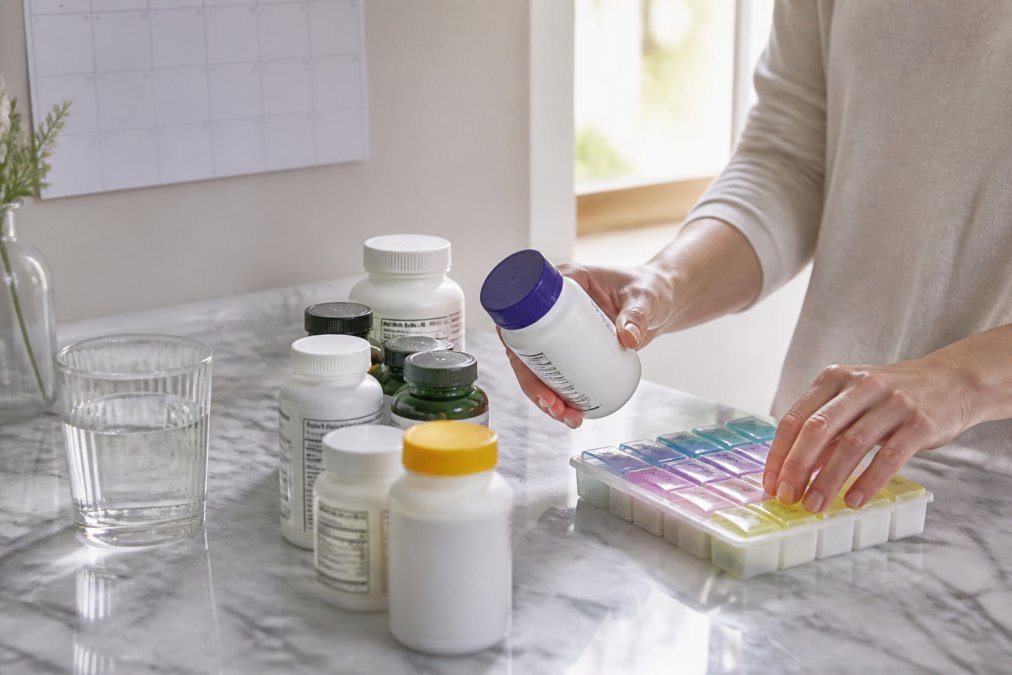
Here's a practical implementation framework:
Morning routine (with breakfast or largest meal):
- Probiotic with at least 10 billion CFU
- Vitamin D3 (2,000 IU minimum)
- Iron supplement (if needed; take separately from calcium/magnesium)
- B-complex or B12 supplement
Midday or afternoon (2-3 hours after morning supplements):
- Magnesium (200-400 mg)
- Ginger extract (1,000-2,000 mg) if nausea is present
Evening (with dinner):
- Zinc and biotin
- Magnesium (second dose if splitting)
When to Consult Your Healthcare Provider
Supplementation supports your GLP-1 therapy, but it doesn't replace medical oversight. Certain situations require a conversation with your prescribing physician before proceeding.
Frequently Asked Questions
What supplements actually help with GLP-1 nausea?
Ginger, probiotics, magnesium, and digestive enzymes have the strongest evidence for reducing nausea and gastrointestinal discomfort during GLP-1 treatment. Ginger works by supporting gastric motility, while probiotics help maintain a healthy gut microbiome disrupted by rapid weight loss. Magnesium and digestive enzymes support nutrient absorption and reduce bloating. A comprehensive formula like Ease combines these ingredients with B vitamins and zinc to address both nausea and the nutritional gaps created by reduced food intake.
Are supplements safe to take with semaglutide or tirzepatide?
Most standard supplements are safe with GLP-1 medications, but timing matters. Take supplements 2-3 hours apart from your injection to avoid interaction with absorption. Iron, calcium, and certain medications can reduce the effectiveness of GLP-1 drugs if taken together. Always inform your prescribing physician about any supplements you plan to add, especially if you're on other medications. Third-party tested supplements from FDA-registered facilities reduce contamination risks and ensure ingredient accuracy.
How quickly will supplements help my GLP-1 nausea?
Ginger and peppermint typically provide relief within 30 minutes to an hour, while probiotics and digestive enzymes work over days to weeks as they restore gut balance. Start with digestive support formulas during the first weeks of GLP-1 treatment, then add targeted nutrients like biotin and collagen as your body adjusts.
Why choose specialized GLP-1 supplements over standard multivitamins?
Specialized formulas include therapeutic doses of ginger and probiotics for nausea relief, plus methylated B vitamins and bioactive forms of nutrients. They also eliminate proprietary blends, so you know exactly what you're taking, critical when managing medication side effects. Transparent, third-party tested formulas from GMP-certified facilities offer clinical-grade quality.
GLP-1 side effects are real and they're common, but they don't have to derail your health journey. The right supplements address both the immediate discomfort and the underlying nutrient gaps created by rapid weight loss. Afterglow's collection of formulas is specifically designed for GLP-1 users, with third-party testing and transparent ingredient lists that let you know exactly what you're taking. Shop the collection and find the support that matches your individual needs.