

How to Plan Meals When GLP-1 Reduces Appetite
Last Updated: November 12, 2026
Quick Summary
To plan meals when GLP-1 reduces appetite, set eating times on the clock instead of waiting for hunger, eating every three to four hours. Start each meal with protein, then build a weekly plan from a few repeatable components and batch-prep them in short sessions.
- Eat every three to four hours, even if you only manage a few bites.
- Start each meal with protein such as eggs, Greek yogurt, cottage cheese, or fish.
- Choose one protein, one fiber source, and one produce item per meal.
- Batch-cook proteins and vegetables on the weekend, then refresh midweek.
- Confirm your daily calorie and protein target with your doctor or a registered dietitian.
Table of Contents
- Why Appetite Drops on GLP-1 and What That Means for Your Plate
- How to Eat on GLP-1 When You're Not Hungry
- Step-by-Step: Build a Weekly Meal Plan Around Protein and Fiber
- A Free GLP-1 Meal Plan You Can Adjust as Appetite Changes
- GLP-1 Food List: Nutrient-Dense, Easy-to-Tolerate Choices
- Hydration and Constipation Tips While Eating Less
- Your Next Step: Start a One-Week Plan and Track What Works
- Frequently Asked Questions
Why Appetite Drops on GLP-1 and What That Means for Your Plate
Learning to plan meals when GLP-1 reduces appetite starts with one honest fact: you may not feel hungry, but your body still needs fuel. This guide walks you through a practical plan.
GLP-1 medications such as semaglutide and tirzepatide slow stomach emptying and signal fullness to the brain. That means smaller portions can feel like a full meal. It also means it is easy to eat too little without noticing.
Here is what that changes on your plate:
- Protein comes first. It helps protect muscle while you lose weight.
- Fiber keeps digestion moving. It matters more when you eat less.
- Fluids count. Thirst can feel like hunger, and dehydration can add to fatigue.
- Small, regular meals beat skipping meals. Missing meals often leads to a crash later.
A common mistake is treating low appetite as a sign you are doing well. Eating less is expected. Eating too little is a different problem.
How to Eat on GLP-1 When You're Not Hungry
Eating well when you feel no hunger takes a schedule, not willpower. Set eating times on the clock instead of waiting for hunger.
Try these habits:
- Eat every three to four hours, even if you only manage a few bites.
- Start with protein. Eggs, Greek yogurt, cottage cheese, or fish are good first choices.
- Use phone reminders for meals and snacks.
- Keep ready-to-eat options on hand, such as hard-boiled eggs or a protein shake.
Protein is the hardest target to hit with a low appetite. You can find specific tactics for getting enough protein with a low appetite. Some people find that shakes are the easiest way to reach it. Hold Performance Whey Protein Blend (Chocolate) and Hold Performance Whey Protein Blend (Vanilla) each provide 22 grams of protein per serving, priced at $55.00, and mix with cold water. They are useful on days when a full plate feels like too much.
Watch out: Do not replace whole meals with shakes for long periods. Food provides fiber, vitamins, and minerals that a shake alone may not.
Step-by-Step: Build a Weekly Meal Plan Around Protein and Fiber
A weekly plan removes guesswork. The goal is not a perfect menu, it is a repeatable system you can shrink or expand as appetite changes. Follow these four steps.
Step 1: Set Your Protein and Calorie Targets With Your Clinician
- Ask your doctor or a registered dietitian for a daily calorie and protein target. Your calorie needs depend on your health, weight, and activity level.
- Write the protein goal on your fridge. Ask your care team which protein target fits you, and split it across meals and snacks.
- Track meals for one week to see where you fall short. Most people discover breakfast and dinner are fine and lunch is the gap.
Watch out: Do not set an aggressive calorie target on your own. Very low intake can leave you short on nutrients, so confirm any calorie target with your care team.
Step 2: Pick Anchor Meals and Mix-and-Match Components
Instead of memorizing a full menu, build a small library of components you can combine. Choose one protein, one fiber source, and one produce item per meal.
- Protein anchors: 3 eggs, 3/4 cup Greek yogurt, 1/2 cup cottage cheese, 3-4 ounces chicken or fish, 1/2 cup tofu, or one protein shake.
- Fiber anchors: 1/2 cup cooked quinoa, 1/2 cup lentils or beans, 1/2 cup oatmeal, 1 slice whole-grain toast, or 1/2 cup cooked vegetables.
- Produce and fluids: 1/2 cup cooked vegetables, 1/2 cup berries, 1 small banana, or 1 cup broth-based soup.
A sample day built from components: breakfast is 3 eggs plus 1/2 cup spinach plus 1 slice toast; lunch is 3 ounces chicken plus 1/2 cup quinoa plus roasted peppers; dinner is 3-4 ounces salmon plus 1 cup broccoli plus 1/2 small sweet potato; snacks are 3/4 cup Greek yogurt with berries and 1 tablespoon peanut butter with apple slices.
Step 3: Batch-Prep in Two Short Sessions
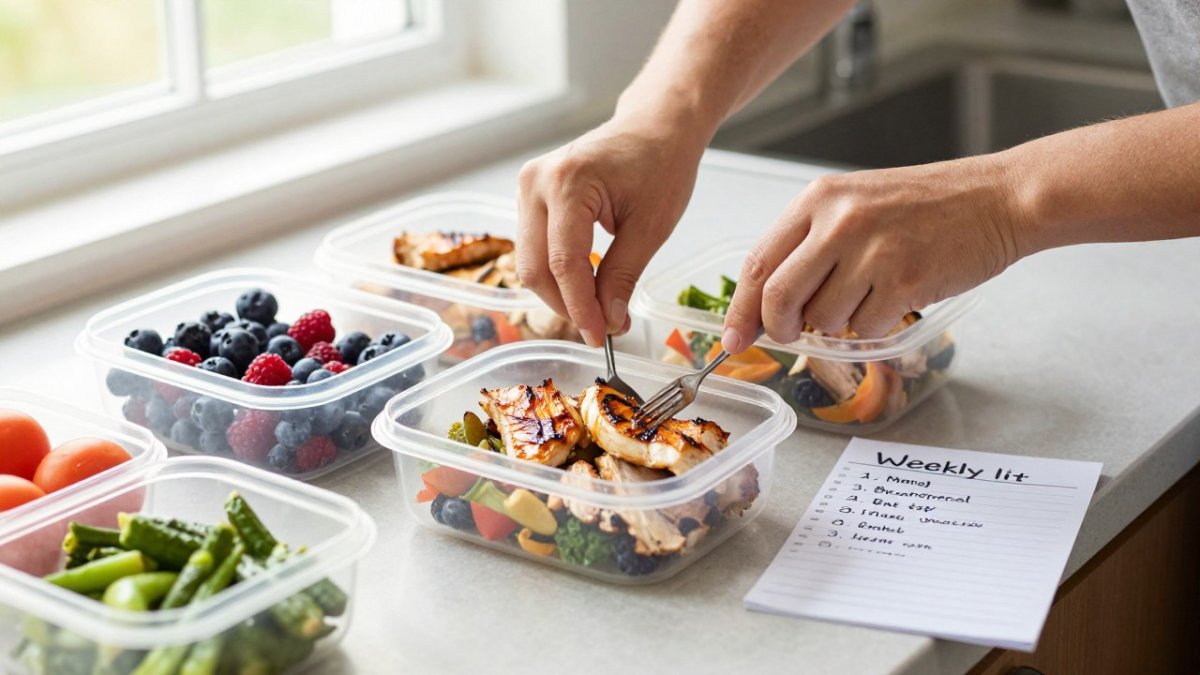
Cook proteins and vegetables on the weekend, then do a midweek refresh so food stays fresh and appealing.
- Weekend session (about 60-90 minutes): bake or grill 2 pounds of chicken or fish, roast two trays of vegetables, cook a pot of quinoa or lentils, and hard-boil a dozen eggs.
- Midweek session (about 20 minutes): restock cut vegetables, portion yogurt and berries, and cook one fresh protein if you are tired of the first batch.
- Storage: refrigerate cooked proteins and grains for 3-4 days, freeze half the batch for later in the week, and keep cut produce in clear containers at eye level so it is the first thing you see.
Portion into small containers, 1/2 to 1 cup per container, so each meal is ready when appetite is low. Small containers also make it easier to eat half now and half an hour later.
Step 4: Shop From One Reusable List
Your shopping list should cover:
- Lean proteins (chicken, fish, eggs, tofu, Greek yogurt, cottage cheese)
- Fresh and frozen vegetables and fruit
- High-fiber staples (oats, beans, lentils, whole grains)
- Dairy or fortified alternatives
- Protein shakes or powders for backup
- Broth, herbs, and lemon for flavor without heavy fat
Shopping from one list keeps the plan on track and avoids impulse buys that do not fit your targets. Keep the list on your phone so you can reuse it each week and swap only the proteins and produce that are on sale.
A Free GLP-1 Meal Plan You Can Adjust as Appetite Changes
Use this sample week as a starting point. Adjust portions based on how you feel.
| Day | Breakfast | Lunch | Dinner | Snacks |
|---|---|---|---|---|
| Monday | Eggs and spinach | Chicken and quinoa | Salmon and broccoli | Yogurt, berries |
| Tuesday | Oatmeal with protein powder | Turkey wrap | Lentil soup | Apple, peanut butter |
| Wednesday | Greek yogurt parfait | Tuna salad | Chicken and sweet potato | Cottage cheese |
| Thursday | Eggs and spinach | Leftover chicken bowl | Tofu stir-fry | Hard-boiled egg |
| Friday | Oatmeal with protein powder | Lentil soup | Baked fish and rice | Berries |
When appetite drops further, cut each portion in half and eat more often. When appetite returns, add back a carbohydrate and a healthy fat. Keep protein steady throughout.
GLP-1 Food List: Nutrient-Dense, Easy-to-Tolerate Choices
Some foods sit better than others during treatment, and the right choice depends on which side effect you are managing. Use this symptom-by-symptom guide as a starting point, then keep a short note of what works for you. Prioritizing protein intake remains essential to prevent lean mass loss while you Combat Nutra needs through these strategic adjustments.
If Nausea Is the Main Problem
- Easier options: cold or room-temperature foods such as Greek yogurt, cottage cheese, crackers, plain toast, bananas, applesauce, and broth-based soup.
- Smaller, more frequent meals: 4-6 mini-meals of 1/2 to 1 cup each often sit better than three full plates.
- Comfort between meals: many people enjoy warm drinks between meals.
- Watch out: greasy, fried, or very sweet foods and strong cooking smells tend to make nausea worse.
If Constipation Is the Main Problem
- Easier options: oatmeal, lentils, beans, berries, cooked apples or pears, prunes, and whole grains in small amounts.
- Add fiber slowly: start with one fiber-rich serving per day and increase over a week or two so you do not trade constipation for bloating.
- Pair fiber with fluids: fiber without enough water can make constipation worse, so sip water steadily through the day.
If Reflux or Heartburn Is the Main Problem
- Easier options: lean chicken, fish, tofu, cooked vegetables, oatmeal, and non-citrus fruit.
- Meal pattern: eat smaller portions and stay upright for about 30 minutes after eating.
- Watch out: large meals, high-fat foods, carbonated drinks, caffeine, and spicy or acidic foods are common triggers.
If Food Aversions Are the Main Problem
- Easier options: bland, familiar foods you already tolerate, plain pasta with a little olive oil, rice, eggs, yogurt, and smoothies.
- Texture matters: some people tolerate smooth textures (yogurt, shakes, soups) better than chewy meats during aversions.
- Rotate rather than force: if a food turns you off, set it aside for a week and try a different protein instead of pushing through.
Nutrient-Dense Core List
- Lean proteins: chicken breast, fish, eggs, tofu, Greek yogurt, cottage cheese
- Soft fruits: bananas, berries, cooked apples
- Cooked vegetables: carrots, zucchini, spinach
- Whole grains in small amounts: oatmeal, quinoa, brown rice
- Broth-based soups: lentil or chicken soup
When Intake Stays Very Low
Meal ideas alone do not solve a persistent problem. Contact your prescriber or a registered dietitian if any of these apply:
- You are consistently eating fewer than about 1,000 calories a day for more than a few days.
- You cannot keep fluids down, or you feel dizzy or lightheaded.
- You are losing weight faster than your care team expected.
- Constipation lasts more than a few days or comes with severe stomach pain.
- You are too nauseated to eat most meals for more than a day or two.
Ease: GLP-1 Support ($60.00) is a digestive-support formula. It includes magnesium, probiotics, digestive enzymes, ginger, and peppermint, plus B vitamins, zinc, iron, biotin, and vitamin D3. Read the full ingredient list and confirm with your doctor before adding any supplement.
Hydration and Constipation Tips While Eating Less
Eating less often means drinking less without realizing it. For a deeper, fiber-focused food list, see the best foods for constipation on Ozempic. Low fluid and low fiber can both lead to constipation.
Try these steps:
- Sip water all day, aiming for steady intake rather than large gulps.
- Add fiber slowly. Start with one serving of oats, berries, or beans per day.
- Keep a water bottle within reach at your desk and by your bed.
- Choose fluids with electrolytes if you sweat heavily or feel lightheaded.
If constipation lasts more than a few days, or you have severe stomach pain, contact your healthcare provider.
Your Next Step: Start a One-Week Plan and Track What Works
Plan meals when GLP-1 reduces appetite by starting small. Pick three anchor meals, set a protein target, and shop from one list this week. Track how you feel each day and adjust portions as needed. If your intake stays low, talk with your doctor or a registered dietitian. Afterglow's Ease: GLP-1 Support and Hold Performance Whey Protein Blend are available as options to consider as part of your plan.
Frequently Asked Questions
How do I eat on a GLP-1 when I'm not hungry?
Eat on a schedule rather than by hunger cues. Aim for three small meals and one or two snacks, each anchored by a protein source such as Greek yogurt, eggs, fish, or a protein shake. Start with the protein, then add fiber-rich vegetables or fruit. If a full plate feels impossible, split one meal into two smaller ones eaten an hour apart. Keep a simple log of what you manage to eat, and share persistent low intake with your prescriber or a registered dietitian.
How can I get enough protein when a GLP-1 reduces my appetite?
Make protein the first thing you plan at every meal and snack. Options that are easy to finish include a 22-gram whey protein shake, cottage cheese, hard-boiled eggs, and lean deli turkey. The Hold Performance Whey Protein Blend in chocolate or vanilla can be mixed with cold water when solid food feels heavy. Spreading protein across the day usually works better than trying to hit a large target at one sitting.
Do I need a supplement to support my digestion while on a GLP-1?
Supplements are optional and do not replace a balanced diet. Some people on GLP-1 medication look for digestive and micronutrient support because eating less can reduce intake of vitamins and minerals. Ease: GLP-1 Support combines magnesium, probiotics, digestive enzymes, and ginger and peppermint extracts with methylated B vitamins, zinc, iron, and vitamin D3. Review any supplement with your prescriber before starting, especially if you take other medications.
