

9 Best Foods for Constipation on Ozempic, Backed by Fiber
Last Updated: October 25, 2026
Quick Summary
The best foods for constipation on Ozempic are high-fiber options that combine soluble and insoluble fiber in small, tolerable portions, such as raspberries, pears with skin, prunes, lentils, chia seeds, broccoli, sweet potato, and oats. Aim for 25-30 grams of fiber a day, build up slowly, and drink at least 8 cups of fluid daily so fiber softens stool instead of hardening it.
- Semaglutide slows stomach emptying and calms the gut, so food and waste move more slowly.
- Increase fiber by about 3-5 grams every 3-4 days to prevent bloating.
- Two tablespoons of chia seeds deliver about 10 grams of fiber in a small portion.
- Start with soluble fiber sources like oats, psyllium, chia, and peeled fruit if your gut is sensitive.
- Get medical help if constipation lasts more than a week despite fiber and fluids.
Table of Contents
- Why Semaglutide Slows Digestion and Causes Constipation
- High-Fiber Foods for Constipation: What to Eat and How Much
- Fiber and Ozempic: How to Increase Intake Without Bloating
- Hydration for Constipation on Ozempic: How Much Water You Actually Need
- A One-Day Meal Plan With Fiber Totals
- Best Laxative to Take With Ozempic: What to Know Before You Try One
- Red Flags: When Food and Fiber Are Not Enough
- Building a Daily Digestive Routine With Afterglow
- Frequently Asked Questions
Why Semaglutide Slows Digestion and Causes Constipation
Constipation on Ozempic happens because semaglutide slows stomach emptying and calms the gut, so food and waste move through more slowly.
Semaglutide is a GLP-1 medication that mimics a gut hormone.
The result: harder, drier stools and more time between bowel movements.
The fix is rarely one big change. It is small, steady shifts in what you eat and drink.
- Slower stomach emptying = food sits longer
- Smaller meals = less total fiber
- Less fluid intake = harder stools
Most guides skip the real question: how much fiber, and in what form?
High-Fiber Foods for Constipation: What to Eat and How Much
The best high-fiber foods for constipation are ones that combine soluble and insoluble fiber in a form you can tolerate in small portions.
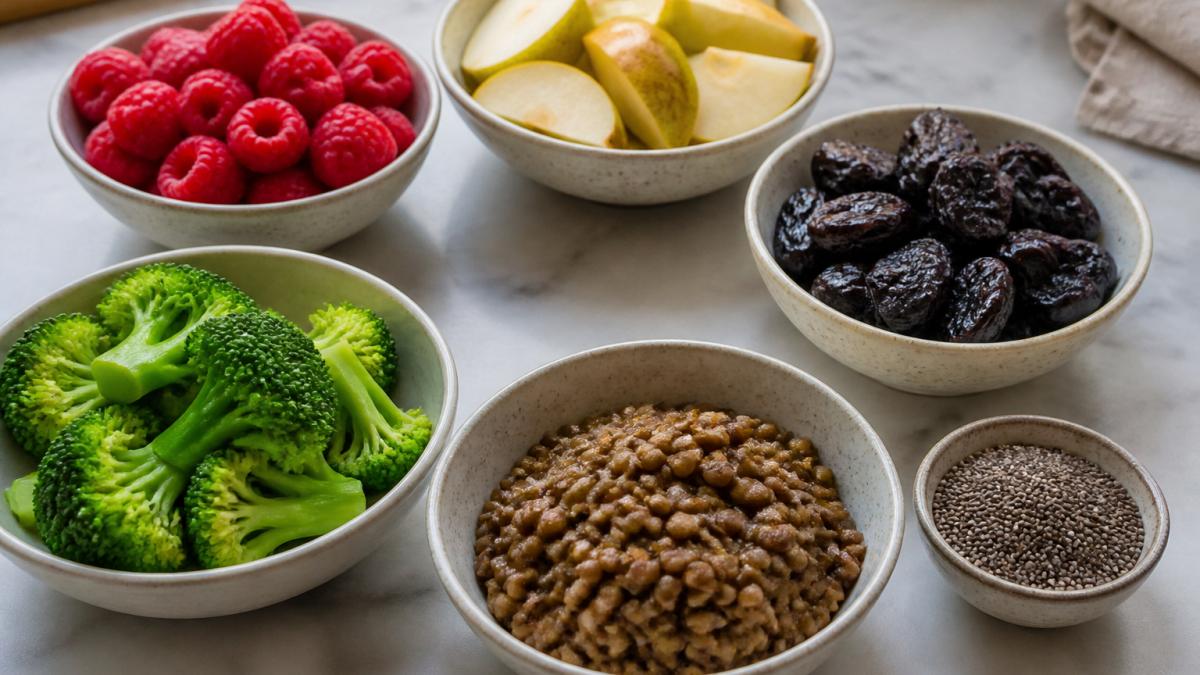
Fiber is the part of plant food your body cannot digest. It adds bulk and holds water in your stool, which helps it pass. There are two types:
- Soluble fiber softens stool and feeds gut bacteria
- Insoluble fiber adds bulk and speeds transit
You need both. Here is roughly what each food delivers per serving.
| Food | Serving | Fiber (approx.) | Type |
|---|---|---|---|
| Raspberries | 1 cup | 8 g | Both |
| Pear (with skin) | 1 medium | 5-6 g | Both |
| Prunes | 4-5 pieces | 3 g | Soluble |
| Lentils | 1/2 cup cooked | 8 g | Both |
| Chia seeds | 2 tbsp | 10 g | Soluble |
| Broccoli | 1 cup cooked | 5 g | Both |
| Sweet potato | 1 medium | 4 g | Both |
| Oats | 1/2 cup dry | 4 g | Soluble |
Fruits and Vegetables That Move Things Along
Start with fruit you can eat in small amounts. Prunes, pears, apples, berries, and kiwi are the standouts. Prunes contain sorbitol, a natural sugar alcohol that pulls water into the bowel (pubmed.ncbi.nlm.nih.gov).
- Prunes: 3 grams per 4-5 pieces, gentle and reliable
- Pears and apples: eat the skin, that is where the fiber lives
- Raspberries and blackberries: highest fiber per cup
Eat fruit whole rather than juiced. Juice strips the fiber and leaves the sugar.
Whole Grains, Beans, and Legumes
Beans and lentils are fiber powerhouses, but they can cause gas if you add them too fast. Start with a quarter cup and build up.
- Lentils: 8 grams per half cup, smooth texture
- Chickpeas: 6 grams per half cup
- Black beans: 7 grams per half cup
A common mistake is loading up on beans in week one. That is a fast track to bloating. Add one legume serving every few days instead.
Fiber and Ozempic: How to Increase Intake Without Bloating
Adding fiber too fast is the most common cause of bloating on a GLP-1 medication. The fix is not to avoid fiber.
Here is the mechanism in plain terms. Your gut bacteria ferment fiber, and that fermentation produces gas. When you jump from a low-fiber diet to a high-fiber one overnight, the bacterial population that digests fiber has not caught up, so gas and bloating spike.
Do the Portion Math for a Smaller Appetite
On semaglutide, you may feel full after a few bites. That means you cannot rely on volume to hit a fiber target. You have to concentrate fiber into small portions. Compare these two snacks:
- 1 cup of watermelon: about 0.6 g fiber, mostly water
- 2 tablespoons of chia seeds stirred into 4 oz of water or yogurt: about 10 g fiber
Both take up similar stomach space, but the chia delivers roughly 16 times the fiber. When appetite is low, choose the denser option at each meal and snack. A practical target is 25-30 g of fiber a day, which is the general adult recommendation, but build toward it over several weeks rather than days.
A Safe Ramp Schedule
Use this as a template, not a prescription. Adjust to your tolerance and check with your prescriber if you have other digestive conditions.
| Week | Daily fiber target | What to add | Fluid check |
|---|---|---|---|
| 1 | 12-15 g | One fiber-rich fruit at breakfast | 8 cups |
| 2 | 15-18 g | Add 1/4 cup cooked lentils or beans at lunch | 8-9 cups |
| 3 | 18-22 g | Add a whole-grain swap at one meal | 9 cups |
| 4 | 22-26 g | Add 1 tbsp chia or ground flax | 9-10 cups |
| 5+ | 25-30 g | Hold and adjust to tolerance | 9-10 cups |
If bloating spikes at any step, hold at the previous level for a week before trying again. Do not push through severe discomfort.
Troubleshooting Bloating Without Giving Up on Fiber
- Gas and mild bloating: split fiber across more, smaller meals instead of concentrating it. A half cup of lentils at lunch and a half cup at dinner is gentler than a full cup at once.
- Hard, dry stools despite fiber: you are likely under-hydrated. Add a glass of water with each fiber serving and consider a warm drink in the morning.
- Cramping with gas: cook vegetables soft, peel skins on apples and pears if raw skin bothers you, and choose soluble-fiber sources like oats, psyllium, and peeled fruit over coarse insoluble bran.
Soluble vs. Insoluble: Which to Lean On First
If your gut is sensitive, start with soluble fiber, which dissolves in water and forms a gel that softens stool. Good sources include oats, psyllium husk, chia seeds, ground flaxseed, peeled apples and pears, and cooked carrots. Insoluble fiber, found in wheat bran, vegetable skins, and whole grains, adds bulk and speeds transit but can be rougher on a sensitive gut.
If you want a deeper plan for supporting your gut while losing weight, our guide on supporting gut health during weight loss walks through it step by step.
Hydration for Constipation on Ozempic: How Much Water You Actually Need
Fiber only softens stool if there is enough water to bind it. Aim for roughly 8 cups of fluid a day, and more if you sweat or live in a dry climate.
Without fluid, extra fiber can make constipation worse, not better. That is the trap most people fall into.
- Sip water through the day, not all at once
- Add electrolytes if you drink a lot of plain water
- Warm fluids in the morning can help trigger a bowel movement
If plain water is hard to get down, our guide to safe electrolyte drinks for semaglutide covers options that support both hydration and digestion.
A One-Day Meal Plan With Fiber Totals
A realistic day on a GLP-1 is small meals, not three big plates. This plan spreads fiber across the day and totals about 28 grams, close to the common 25-30 gram target.
| Meal | Food | Fiber |
|---|---|---|
| Breakfast | 1/2 cup oats + 1/2 cup raspberries | 8 g |
| Snack | 1 small pear | 5 g |
| Lunch | 1/2 cup lentils + steamed broccoli | 13 g |
| Snack | 2 tbsp chia in water | 10 g |
| Dinner | Small sweet potato + greens | 5 g |
That lands near 41 grams, which is too much for most people starting out. Cut the chia snack and the pear to bring it to about 26 grams.
For a wider set of meal ideas, see our guide on what foods to eat on GLP-1 medication.
Best Laxative to Take With Ozempic: What to Know Before You Try One
There is no single "best" laxative for everyone on Ozempic. The right choice depends on your symptoms, and you should check with your prescriber before starting one.
Laxatives fall into a few groups:
- Bulk-forming (psyllium): adds fiber and water, gentlest option
- Stool softeners (docusate): draws water into stool
- Osmotic (polyethylene glycol): pulls water into the bowel
A common mistake is reaching for stimulant laxatives daily. They can cause cramping and your gut can come to rely on them.
Watch out: do not combine multiple laxatives or take them long-term without medical advice.
Red Flags: When Food and Fiber Are Not Enough
Some digestive symptoms need a doctor, not a grocery list. Get medical help if constipation lasts more than a week despite fiber and fluids, or if you have severe pain, vomiting, or a hard, swollen belly.
Other signs to take seriously:
- No bowel movement for several days with worsening pain
- Blood in your stool or black, tarry stools
- Fever alongside stomach pain
These can signal a blockage or another issue that food cannot fix. If your symptoms keep going despite diet changes, our guide on minimizing GLP-1 side effects naturally covers what else to try, and when to call your doctor.
Building a Daily Digestive Routine With Afterglow
A daily routine beats occasional fixes. The pattern that works: fiber at every small meal, water alongside it, a short walk after eating, and a consistent bathroom time.
Here is a simple routine to start:
- Morning: warm water, then oats with fruit
- Midday: a small legume serving and cooked vegetables
- Afternoon: a short walk to get things moving
- Evening: a gentle stretch and a set bathroom window
If you want support built around this routine, our Ease GLP-1 Support formula combines magnesium, probiotics, digestive enzymes, and botanical extracts like ginger and peppermint to support overall digestive function and comfort.

Frequently Asked Questions
How do I get rid of constipation from Ozempic?
Start with food and fluids: aim for about 25 to 30 grams of fiber a day from fruits, vegetables, whole grains, and legumes, and drink enough water that your urine stays pale. Add movement, since a short walk after meals helps stimulate bowel activity. If stools stay hard or you go more than three days without a bowel movement, talk to your prescriber about stool softeners or other options rather than waiting it out.
Which high-fiber foods are easiest to tolerate on Ozempic?
Cooked and soft sources tend to sit better when appetite is low: steamed broccoli, sweet potato, lentils, and canned beans are gentler than large raw salads. Raspberries, pears, and prunes deliver a lot of fiber per serving without much volume. Introduce one new high-fiber food every few days instead of loading up at once, and keep portions small and frequent to match a reduced appetite.
How much water should I drink to help with constipation on Ozempic?
There is no single number that fits everyone, but a common target is roughly 8 to 10 cups of fluid a day, adjusted for body size, activity, and climate. Fiber without enough water can make constipation worse, so increase both together. Sipping throughout the day works better than large amounts at meals, especially if semaglutide has cut your appetite and thirst.
What is the best laxative to take while on Ozempic?
Ask your prescriber before starting any laxative. Bulk-forming options like psyllium need plenty of water to work safely, while osmotic laxatives such as polyethylene glycol draw water into the bowel and are often suggested for occasional use. Stimulant laxatives are usually reserved for short-term relief. Because semaglutide slows stomach emptying, ongoing laxative use should be guided by your clinician rather than self-managed.
Constipation on a GLP-1 is common, and it is manageable with the right foods, enough water, and steady movement. When diet alone is not enough, Afterglow's Ease formula is built to fit into a daily digestive routine, with magnesium, probiotics, and digestive enzymes in one capsule. Get started with Afterglow and support your digestion through every stage of your GLP-1 journey.
