

What Foods to Eat on GLP-1 Medication: A Guide
Last Updated: October 23, 2026
Quick Summary
To decide what foods to eat on GLP-1 medication, prioritize protein first at every meal, then add small fiber sources and keep fats modest. Choose soft, easy proteins like Greek yogurt, eggs, cottage cheese, fish, and protein shakes, and eat 4-6 small meals or snacks instead of 3 large ones. Limit fried, greasy, very spicy foods and sugary drinks, which worsen nausea and reflux.
- Eat 4-6 small meals or snacks instead of 3 large ones, stopping at the first sign of fullness.
- Protein is the top priority because rapid weight loss can cost you muscle along with fat.
- Sip protein shakes slowly over 20-30 minutes, since fast drinking commonly triggers nausea.
- Pair fiber with water, because fiber without enough fluid can make constipation worse.
- Aim for roughly 6-8 cups of fluid a day, adjusted for body size, activity, and weather.
Table of Contents
- How GLP-1 Medications Change Your Appetite and Digestion
- High-Protein Foods for GLP-1: Your First Priority
- Fiber-Rich Foods That Support Digestion
- Building a Simple GLP-1 Meal Plan
- GLP-1 Nausea Foods: What to Eat When Your Stomach Is Upset
- Foods to Avoid on GLP-1 Medication
- Staying Hydrated and Meeting Nutrient Needs
- Frequently Asked Questions
How GLP-1 Medications Change Your Appetite and Digestion
GLP-1 medications slow how fast food leaves your stomach and quiet the hunger signals your brain sends.
The shift is real. Large meals suddenly feel impossible. Heavy, greasy food sits like a brick. Many people find they feel full after a few bites and stay full for hours.
That changes the whole game. You are no longer eating by the clock or by habit. You are eating by capacity and comfort.
Why Portion Size and Meal Timing Matter More Now
Smaller portions spread across the day work better than three big meals. Your stomach empties slower, so a plate that once felt normal now feels like too much.
Try these timing habits:
- Eat 4-6 small meals or snacks instead of 3 large ones
- Stop eating at the first sign of fullness, not the last
- Keep meals to about the size of your palm plus a side
A common mistake is forcing a full plate to "get enough." That usually backfires with nausea. Eat what feels right, then add a snack later.
High-Protein Foods for GLP-1: Your First Priority
Protein is the top priority on GLP-1 medication. Rapid weight loss can cost you muscle along with fat, and protein helps protect it (pubmed.ncbi.nlm.nih.gov). Most people also tolerate protein better than heavy carbs or fats.
Good protein choices include:
- Chicken and turkey
- Fish and seafood
- Eggs
Aim to put protein on your plate first. If you only manage a few bites, make them count.
Easy Protein Sources for Small Appetites
When you can only eat a little, every bite should pull weight. Soft, moist proteins go down easier than dry or chewy ones.
Try scrambled eggs, yogurt, cottage cheese, tuna salad, or a shake. Our Hold Performance Whey Protein Blend delivers 22 grams of protein per serving and mixes into water in seconds, which helps on days when your appetite is low.

Fiber-Rich Foods That Support Digestion
Fiber helps keep digestion moving, which matters because GLP-1 medications can slow your gut and cause constipation. Build fiber up gradually so your body adjusts.
Fiber-rich options to work in:
- Berries and other fruits
- Leafy greens and cruciferous vegetables
- Beans and lentils
Pair fiber with water. Fiber without enough fluid can make constipation worse, not better. If digestion is a struggle, our guide on supporting gut health during weight loss goes deeper on what helps.
Building a Simple GLP-1 Meal Plan
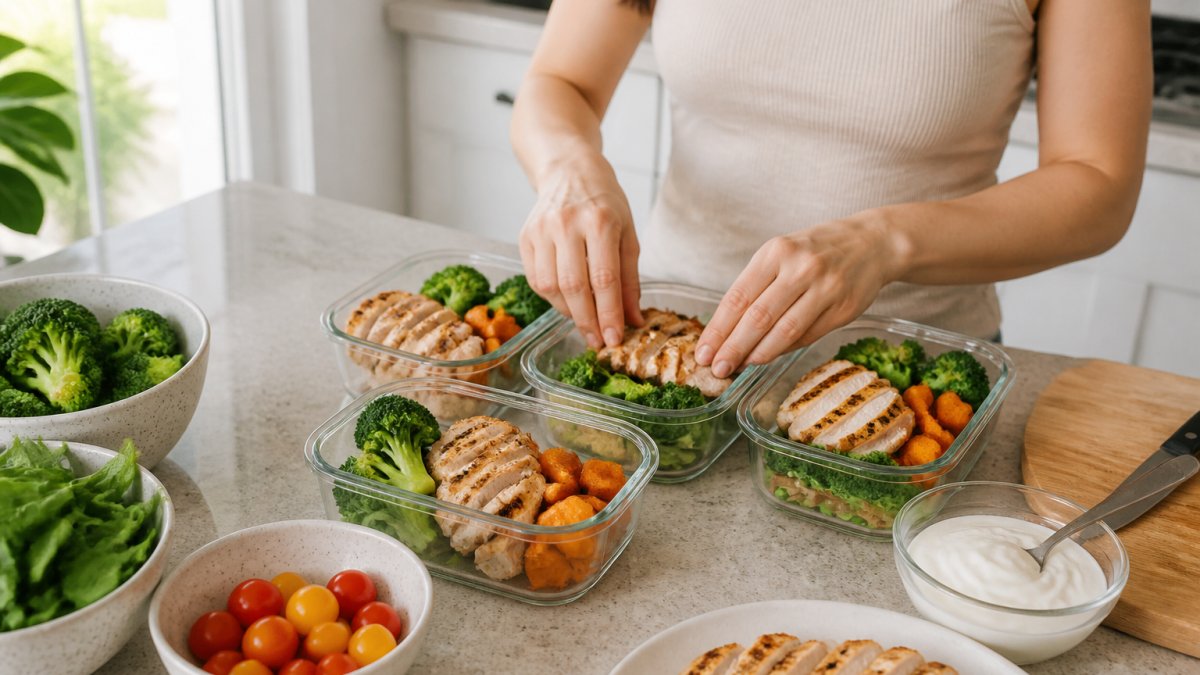
A good GLP-1 meal plan is built around small portions, protein first, and foods you actually tolerate. Keep it simple and repeat meals that work for you.
Start with a base of protein, add a small fiber source, and keep fats modest. Cook in batches so easy meals are ready when appetite shows up.
A Sample Day of Meals and Snacks
Here is a simple framework you can adjust to your own tolerance:
| Time | Meal | Example |
|---|---|---|
| Morning | Small breakfast | Greek yogurt with berries |
| Mid-morning | Snack | Half a protein shake |
| Midday | Small lunch | Grilled chicken with steamed vegetables |
| Afternoon | Snack | Cottage cheese or a few nuts |
| Evening | Small dinner | Baked fish with brown rice |
| If hungry | Optional snack | Eggs or a small smoothie |
Treat this as a starting point, not a rulebook. Some days you will eat more, some less. If eating enough is a constant struggle, our guide on how to eat enough on GLP-1 walks through practical fixes.
GLP-1 Nausea Foods: What to Eat When Your Stomach Is Upset
Nausea is the most common reason people struggle to eat on GLP-1 medication, but it is rarely the only symptom. The same slowed stomach emptying that causes nausea can also cause constipation, diarrhea, reflux, bloating, and early fullness. The food strategies differ by symptom, so it helps to match what you eat to what you are actually feeling rather than following one generic bland diet.
If nausea is the main problem
Bland, low-odor, easy-to-digest foods are the standard starting point. Think plain crackers, toast, white rice, bananas, applesauce, and clear broths. Cold or room-temperature foods often go down better than hot ones because strong smells can trigger nausea.
Ginger tea, peppermint tea, and small amounts of ginger chews help some people settle their stomach. A common pattern is that a few crackers before getting out of bed reduces morning nausea.
If constipation is the main problem
Constipation is common because the gut slows down. The fix is not just more fiber, it is fiber plus fluid plus movement. Build fiber gradually from fruit, vegetables, beans, oats, and whole grains, and drink water steadily through the day. Fiber without enough fluid can make constipation worse. A morning routine that includes warm fluids and a short walk often helps more than any single food.
If diarrhea is the main problem
Diarrhea is less common than constipation but does happen, especially with dose increases or high-fat meals. Temporarily lean on lower-fat, lower-fiber foods such as white rice, bananas, plain toast, and lean poultry, and replace fluids with water and electrolyte solutions. Reintroduce fiber and dairy slowly once things settle.
If reflux or bloating is the main problem
Reflux and bloating usually respond to smaller portions, lower-fat meals, and avoiding very spicy or acidic foods. Staying upright for 30-60 minutes after eating and not lying down right after a meal helps many people. Carbonated drinks and large volumes of liquid with meals tend to make bloating worse.
If early fullness is the main problem
Early fullness is not a side effect to fix, it is the medication working. The practical response is to eat protein first, keep portions small, and plan a snack for when hunger returns a few hours later. Forcing a full plate to "get enough" is the most common trigger for nausea.
For more tactics beyond food, our guide on managing nausea on GLP-1 covers seven practical strategies.
Foods to Avoid on GLP-1 Medication
Some foods make side effects worse for most people. The usual culprits are high-fat, fried, greasy, and very spicy foods. These sit heavy in a slow-emptying stomach and often trigger nausea or reflux.
Foods to limit or avoid:
- Fried and greasy foods
- Heavy creams and rich sauces
- Very spicy dishes
This does not mean never. It means notice what your body does afterward, then decide if it is worth it.
Staying Hydrated and Meeting Nutrient Needs
Hydration is easy to overlook when your appetite is low, yet it matters more than ever. Aim for water throughout the day, sipped steadily rather than gulped at meals. Dehydration can worsen fatigue, constipation, and headaches, and it can make nausea feel worse. A practical target most adults can use is roughly 6-8 cups of fluid a day, adjusted for body size, activity, and weather, with more in hot conditions or during exercise.
Why nutrient adequacy deserves attention
When you eat far less food, you take in fewer calories, protein, vitamins, and minerals. That is expected during weight loss, but it is not something to ignore. The goal is not to force food down, it is to make the food you do eat count and to know when to ask for help.
Three things are worth tracking in a simple way:
- Protein: Most adults do well aiming for protein at every eating occasion. A palm-sized portion of chicken, fish, Greek yogurt, cottage cheese, tofu, or a protein shake is a reasonable anchor. Protein protects muscle during rapid weight loss.
- Fluids: Sip steadily between meals. If urine is dark or you feel dizzy on standing, you are likely behind.
- Micronutrients: A daily multivitamin is a common, low-effort way to close small gaps when intake is low. It does not replace food, but it is a reasonable safety net.
When to ask for monitoring
Some situations warrant a conversation with a clinician or registered dietitian rather than self-management:
- You have lost a large amount of weight quickly, or weight loss is faster than expected.
- You are eating very little for more than a couple of weeks.
- You have persistent fatigue, hair loss, or frequent dizziness.
A clinician may recommend lab monitoring for iron, vitamin B12, vitamin D, or other markers, and may adjust your dose or refer you to a dietitian. This is routine, not a sign of failure.
Medication-specific caveats
Nutrition advice for GLP-1 medications is broadly similar across the drug class, but it is not identical. Different medications have different dosing schedules, different side-effect profiles, and different labeling. Recommendations that apply to one may need adjustment for another.
At Afterglow, our formulas are built for exactly this stage. Our Ease GLP-1 Support combines magnesium, probiotics, digestive enzymes, and ginger to support digestive comfort, plus a spectrum of B vitamins, zinc, iron, and vitamin D3 for daily nutrient intake.
Small, protein-first meals, steady hydration, and a plan for nausea cover most of what you need on GLP-1 medication. Build these habits before side effects force the issue, and loop in your prescriber or a dietitian if intake stays low or symptoms persist.
Frequently Asked Questions
What foods should you avoid while taking GLP-1 medication?
Limit fried foods, greasy takeout, and heavy cream sauces, since high-fat meals can slow stomach emptying and worsen nausea. Cut back on sugary drinks, candy, and refined white bread, which spike blood sugar without keeping you full. Alcohol is worth avoiding or keeping minimal because it can irritate your stomach and add empty calories. Very spicy dishes and large portions of beans or cruciferous vegetables may cause bloating for some people. Introduce foods one at a time so you can spot what triggers discomfort.
How much protein should you eat while taking a GLP-1 medication?
Because appetite drops, spread protein across three small meals and one or two snacks. Lean chicken, fish, eggs, Greek yogurt, cottage cheese, tofu, lentils, and a whey protein shake can each add 20 to 30 grams without a large volume of food. Protein also helps preserve muscle mass as the pounds come off.
What should you eat if a GLP-1 medication makes you nauseous?
Reach for bland, easy-to-digest foods: plain crackers, toast, white rice, bananas, applesauce, clear broth, and boiled eggs. Ginger tea or peppermint can settle the stomach for some people. Eat small amounts every few hours instead of three large meals, and stop eating at the first sign of fullness. Cold foods often smell less strong than hot ones, which helps when cooking aromas trigger queasiness. If nausea keeps you from keeping fluids down for more than a day, call your prescriber.
Can you drink coffee or alcohol while on GLP-1 medication?
Coffee is usually fine in moderation, but caffeine can aggravate nausea and acid reflux in some people, so try a smaller cup and see how you feel. Alcohol is a different story. It can irritate the stomach lining, worsen dehydration, and add calories without nutrition, which matters when you are eating less overall. Many prescribers recommend limiting alcohol or skipping it entirely during dose increases. Ask your doctor what is safe for your specific medication and health history.
Eating well on GLP-1 medication comes down to working with your new appetite, not against it. Small portions, protein first, gentle fiber, and steady hydration carry most of the load. When nutrient gaps and side effects need more support, Afterglow's GLP-1 system is designed to fill them, with third-party tested formulas for muscle, gut, hydration, hair, and skin. Get started with Afterglow and give your body consistent support through every stage of your journey.
