

Can You Take Collagen With Tirzepatide?
Table of Contents
- Can You Take Collagen With Tirzepatide?
- How Tirzepatide Affects Nutrition and Digestion
- Supplements to Take With Tirzepatide
- Supplements to Avoid With Tirzepatide
- Collagen Peptides and Multivitamins During Weight Loss
- Protein Intake While Taking Tirzepatide
- Timing and Quality: Making Supplements Work Safely
- Frequently Asked Questions
Last Updated: October 12, 2026
Can You Take Collagen With Tirzepatide?
Yes, you can take collagen with tirzepatide, but timing and quality matter. Collagen peptides are generally safe alongside tirzepatide, though you'll want to understand how the medication affects your digestion and nutrient absorption. Many people taking tirzepatide experience reduced appetite and slower gastric emptying, which means supplements need to work with your body's new rhythm, not against it.
The real question isn't whether collagen is safe, it's whether it will actually help you during rapid weight loss on tirzepatide. Collagen can support skin elasticity and joint health during weight loss, but it works best when paired with adequate protein intake and the right digestive support.

Here's what you need to know about taking collagen with tirzepatide safely and effectively.
How Tirzepatide Affects Nutrition and Digestion
Tirzepatide works as a GLP-1/GIP receptor agonist, meaning it slows how quickly your stomach empties food. This delayed gastric emptying is what suppresses your appetite, but it also changes how your body processes nutrients.
When food moves through your digestive system more slowly, several things happen:
- Nutrients take longer to absorb
- Your overall food intake drops significantly
- Gastrointestinal discomfort becomes common
- Nutritional gaps can develop over time
This is why supplements like collagen peptides need careful consideration. Your reduced food intake means you're consuming fewer vitamins, minerals, and protein overall (ncbi.nlm.nih.gov). Collagen alone won't fix that gap, but it can help preserve lean muscle and support skin health if you time it right and combine it with other nutritional support.
The delayed gastric emptying also means heavy or large supplement doses can sit in your stomach longer, potentially causing nausea or discomfort. Smaller, more frequent doses of collagen peptides work better than one large serving.
Supplements to Take With Tirzepatide
Not all supplements pair well with tirzepatide. The ones that work best support the specific nutritional gaps created by reduced appetite and slower digestion.
Collagen peptides are generally safe and can help:
- Support skin elasticity during weight loss
- Strengthen hair and nails
- Protect joint health and connective tissue
- Provide amino acids without heavy digestive burden
Protein supplements are essential because tirzepatide significantly reduces your food intake. Protein helps preserve lean muscle during rapid weight loss.
Digestive support matters more on tirzepatide than most people realize. Magnesium, probiotics, and digestive enzymes help your body process food and absorb nutrients despite slower gastric emptying. Afterglow's Ease formula combines these with ginger and peppermint to support digestive comfort and nutrient bioavailability.
Multivitamins and micronutrients fill gaps left by reduced food intake. Look for formulas that include:
- B vitamins (especially B12 and folate)
- Vitamin D
- Iron
- Magnesium
- Zinc
Hydration and electrolyte support becomes critical. Reduced appetite often means lower fluid intake. Electrolytes help your body retain water and support muscle function during weight loss.
The key is choosing supplements formulated for people on GLP-1 medications.
Supplements to Avoid With Tirzepatide
Some supplements can cause problems when combined with tirzepatide's effects on digestion.
Large, heavy supplement doses sit in your stomach longer and increase nausea risk. Avoid:
- Bulky capsule formulas
- Oil-based supplements taken without food
- High-dose mineral supplements in single servings
Supplements that slow digestion further can worsen gastrointestinal discomfort. Be cautious with:
- High-dose fiber supplements (especially without adequate water)
- Certain herbal remedies marketed for digestion
- Supplements high in insoluble fiber
Fat-soluble vitamins in excess can accumulate in your system when food moves slowly through your digestive tract. While vitamins A, D, E, and K are necessary, avoid megadoses.
Supplements with caffeine or stimulants may increase nausea or anxiety, which tirzepatide can already trigger in some people.
The safest approach: choose supplements specifically designed for GLP-1 users.
Collagen Peptides and Multivitamins During Weight Loss
Collagen peptides and a multivitamin do different jobs, and treating them as interchangeable is one of the most common mistakes people make on tirzepatide. Collagen is an incomplete protein; a multivitamin is a micronutrient backstop.
What collagen peptides actually are
Collagen is a structural protein made of amino acids, primarily glycine, proline, and hydroxyproline, that your body also uses to build skin, tendons, ligaments, and cartilage.
What collagen is not
Collagen is not a complete protein (Significant Amounts of Functional Collagen Peptides Can Be Incorporated in the Diet While...).
What the evidence does and does not show
There is no known direct interaction between collagen peptides and tirzepatide. That is different from saying collagen has been proven to improve outcomes on tirzepatide, it has not, because that specific combination has not been the subject of large controlled trials.
Why a multivitamin still matters
When tirzepatide suppresses appetite, total food volume drops, and with it your intake of B vitamins, vitamin D, iron, zinc, magnesium, and other micronutrients. Collagen does not close that gap.
Renew: Hair, Skin and Nails Essentials →
How to combine them without overloading your stomach
- Split collagen into two servings of roughly 10 grams rather than one 20-gram scoop.
- Take the multivitamin with a small meal or snack, not on an empty stomach.
- Stir collagen into warm, not boiling, liquid; boiling water can clump peptides and make them harder to drink.
- Keep total supplement volume per sitting small, since delayed gastric emptying means large doses linger and can trigger nausea.
| Supplement | Primary role | Typical serving | Notes |
|---|---|---|---|
| Collagen peptides | Amino acids for skin, joints, connective tissue | 10-20 g daily, split | Incomplete protein; pair with complete protein |
| Multivitamin | Fill micronutrient gaps from reduced intake | As directed on label | Choose transparent, third-party tested formulas |
| Complete protein (whey, soy, egg, plant) | Preserve lean muscle | 20-30 g per serving | Collagen does not substitute for this |
A realistic expectation to set
Collagen may support skin elasticity and joint comfort, but it will not prevent all skin changes after significant weight loss, and it will not preserve muscle on its own. Muscle preservation depends primarily on total daily protein intake and resistance training.
Protein Intake While Taking Tirzepatide
Protein becomes your most important nutritional priority on tirzepatide. Your appetite is suppressed, your food intake drops, but your body still needs protein to preserve muscle during weight loss.
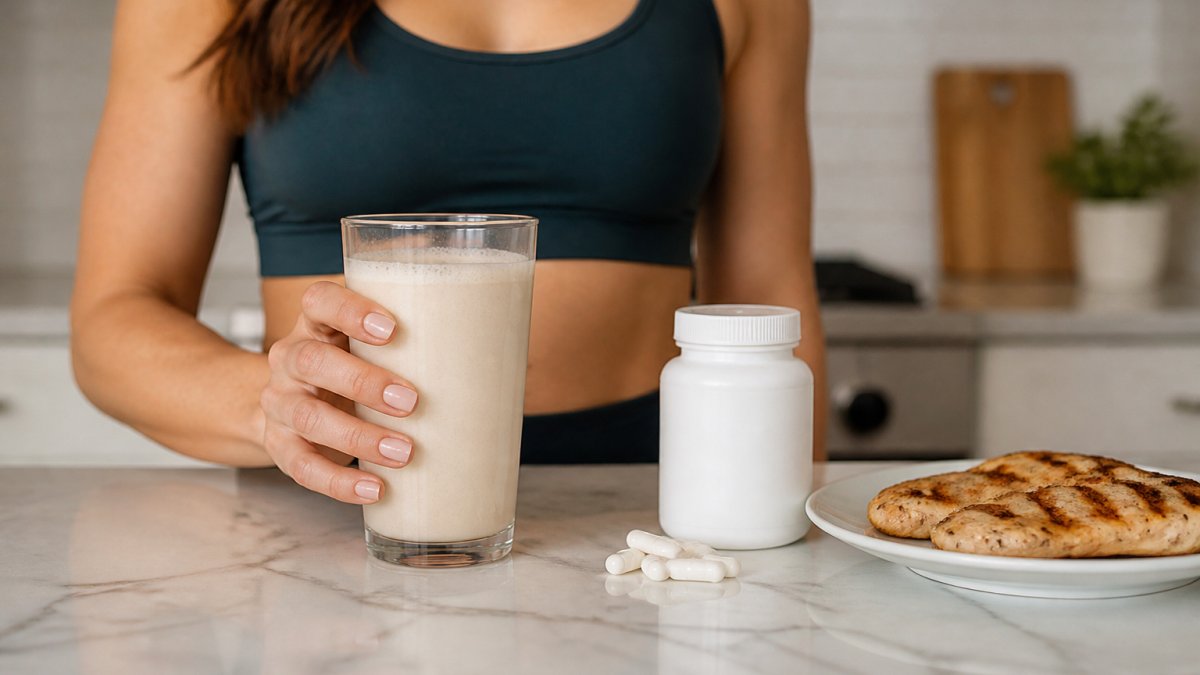
Most people on tirzepatide struggle to eat enough protein through food alone. Your reduced appetite makes it hard to consume the 0.8-1.0 grams of protein per pound of body weight that preserves lean muscle during rapid weight loss.
This is where protein supplements matter:
- Protein powder mixes easily into beverages without adding bulk
- Collagen peptides provide amino acids in a form your stomach tolerates well
- Protein shakes require less chewing and digestion effort than whole foods
The challenge is choosing forms that won't aggravate nausea or sit heavy in your stomach. Whey protein isolate and collagen peptides are gentler on the digestive system than whole-food protein sources when you're on tirzepatide.
Practical approach:
Aim for 80-120 grams of protein daily through a combination of:
- Small amounts of whole food (chicken, fish, eggs)
- Collagen peptides in beverages
- Protein powder in shakes or smoothies
- Digestive support like Afterglow's Ease formula to support overall digestive function and comfort
Spreading protein intake across the day works better than trying to consume it all at one meal. Your stomach empties slowly on tirzepatide, so three smaller protein doses are easier to tolerate than one large one.
Timing and Quality: Making Supplements Work Safely
Tirzepatide slows gastric emptying, which means anything you swallow, food, capsules, powders, gummies, stays in your stomach longer than it normally would. That single fact drives most of the practical timing and form decisions below.
Why timing matters more on tirzepatide
A supplement taken on an empty stomach can sit undissolved and trigger nausea, bloating, or reflux. The fix is not complicated: take oral supplements with a small amount of food or a warm beverage so they have something to mix with and move along.
Form matters as much as timing
- Powder dissolves fastest and is easiest to split into smaller servings. Best choice if you are prone to nausea.
- Capsules are convenient but can feel like they are 'stuck' if taken without food. Take with a meal.
- Gummies often contain added sugar or sugar alcohols, which can worsen GI symptoms in some people. Read the label.
- Liquid shots can be concentrated and may irritate an already-sensitive stomach. Dilute if you use them.
A practical daily pattern
There is no single correct schedule, but a common pattern that works for many people is:
- Morning: multivitamin with a small breakfast or protein shake
- Midday: first collagen serving in warm tea, broth, or coffee
- Afternoon: second collagen serving, or protein powder if protein intake is behind
- Evening: digestive support or electrolytes with dinner
Avoid stacking every supplement into one sitting. Smaller, spaced doses are easier on a slow-emptying stomach than one large load.
On injection day
There is no established rule requiring you to separate supplements from your tirzepatide injection by a set number of hours, because the two are handled differently by the body. That said, many people find their GI symptoms are strongest in the day or two after a dose.
How to evaluate supplement quality
- Read the full ingredient list. Avoid proprietary blends that hide amounts.
- Check for third-party testing. Look for a certificate of analysis or a recognizable testing seal; this verifies purity and potency.
- Watch for added sugars, sugar alcohols, and stimulants. These can aggravate GI symptoms or anxiety that tirzepatide may already be causing.
- Prefer hydrolyzed collagen. Smaller peptides dissolve and absorb more readily.
- Remember the basics. A supplement is not a substitute for a balanced diet, and no collagen product can replace adequate total protein.
Who should get individualized advice first
Collagen is not universally appropriate for everyone on tirzepatide. Talk to your prescriber or pharmacist before adding it if you:
- Are pregnant, planning pregnancy, or breastfeeding
- Have a known allergy to collagen or to ingredients in a specific product (some are derived from bovine, porcine, or marine sources)
- Have kidney disease or another condition where protein intake must be managed
- Take multiple prescription medications, including blood thinners or thyroid medication
- Have a history of kidney stones, which some high-protein or high-collagen regimens can complicate
The bottom line on safety
Collagen is generally well tolerated alongside tirzepatide, but 'generally well tolerated' is not the same as 'right for everyone.' Use small servings, take them with food, choose transparently labeled and third-party tested products, and route any medication-specific question to the clinician who prescribed your tirzepatide.
Frequently Asked Questions
Is it safe to take collagen with tirzepatide?
Yes, collagen peptides can be taken with tirzepatide. There are no known direct interactions between collagen and tirzepatide. However, because tirzepatide slows gastric emptying and reduces appetite, taking collagen with adequate water and spacing it from your injection day may improve tolerance. Start with smaller doses and monitor how your digestive system responds. If you experience nausea or discomfort, consult your prescribing provider before continuing.
What supplements should you not take while on tirzepatide?
Avoid high-dose fat-soluble vitamins (A, D, E, K) without medical guidance, as tirzepatide may affect their absorption. Skip stimulant-based supplements and certain herbal products that increase appetite or interfere with blood sugar control. Some fiber supplements taken in excess can worsen gastrointestinal side effects. Always check with your healthcare provider before starting any new supplement, as individual medication interactions depend on your full health profile and other prescriptions.
Can collagen help with skin changes during weight loss?
Collagen peptides support skin structure and elasticity by providing amino acids your body uses for collagen synthesis. During rapid weight loss on tirzepatide, skin elasticity can decline. While collagen supplementation may help maintain skin health, results vary widely and take weeks to months to appear. Collagen alone cannot prevent all skin changes from significant weight loss. Combining collagen with adequate hydration, protein, and vitamin C (which supports collagen formation) offers the best support.
How quickly will collagen and other supplements show results?
Hair, skin, and nail health improvements typically take 8 to 12 weeks of consistent daily supplementation, as these tissues have slow turnover rates. Digestive support and energy improvements may appear within 1 to 3 weeks. Results depend on your baseline nutrition, the quality of supplements, consistency, and individual metabolism. If you see no improvement after 12 weeks, discuss alternative approaches with your healthcare provider.