

Managing Nausea During GLP-1 Treatment: A Step-by-Step Guide
Table of Contents
- Understanding Why GLP-1 Medications Cause Nausea
- What to Eat with GLP-1 Nausea: Foods That Work
- Foods to Avoid on GLP-1 Medications
- How Long Does GLP-1 Nausea Last: Timeline and Expectations
- Practical Steps to Reduce Nausea During Dose Escalation
- Digestive Support and Supplements for Symptom Relief
- When to Call a Doctor for GLP-1 Nausea
- Frequently Asked Questions
Last Updated: October 11, 2026
Understanding Why GLP-1 Medications Cause Nausea
GLP-1 receptor agonists like semaglutide work by slowing how fast your stomach empties food. This delay in stomach emptying is what helps reduce appetite and supports weight loss. But it's also why managing nausea GLP-1 side effects is so common.
When a GLP-1 medication slows stomach emptying, your digestive system sends signals that feel like nausea, like traffic suddenly backing up on a highway.
Nausea typically peaks in the first few weeks after starting or increasing your dose, then improves as your body adapts over 2-4 weeks, though timelines vary.
What to Eat with GLP-1 Nausea: Foods That Work
When managing nausea GLP-1 side effects, small, bland foods are your best friend. These foods move through your stomach easily and don't trigger additional discomfort.
Focus on these options:
- Crackers and toast, plain, without butter or toppings
- White rice or plain pasta, soft and easy to digest
- Broth or clear soups, warm liquids that settle the stomach
- Applesauce, smooth and gentle on digestion
- Bananas, soft fruit that's easy on your system
- Plain chicken or turkey, lean protein without seasoning
- Eggs, cooked simply, scrambled or soft-boiled
- Oatmeal, plain, with water or mild broth instead of milk
- Ginger tea, ginger has natural anti-nausea properties
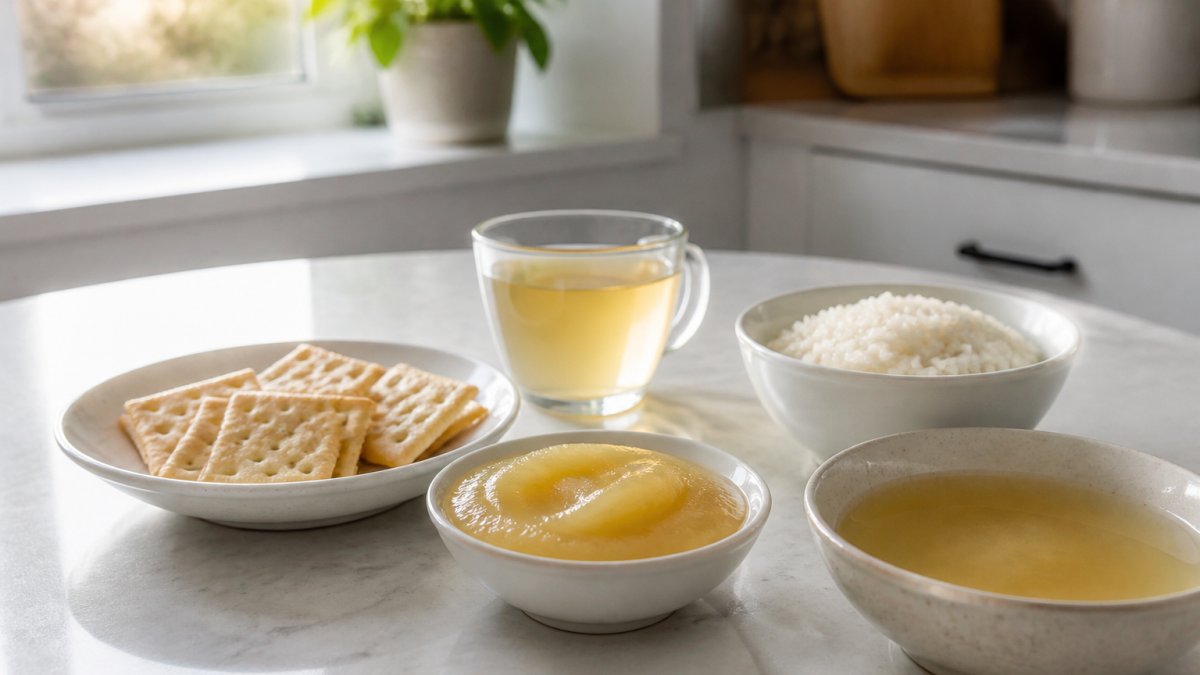
Eat five to six small meals daily (about fist-sized portions) instead of three larger ones.
Eat slowly and stop when full, rushing makes nausea worse because your stomach can't keep up.
Drink fluids between meals, not during them. Sip water, electrolyte drinks, or herbal tea throughout the day to avoid feeling overstuffed.
Foods to Avoid on GLP-1 Medications
Certain foods make nausea worse. Avoid these during the first few weeks of treatment or after a dose increase:
- Greasy or fried foods, these slow digestion even more and trigger nausea
- Sugary foods and desserts, can cause stomach discomfort and worsen symptoms
- Spicy foods, irritate your stomach lining
- High-fat meats, difficult to digest when your stomach is already working slowly
- Dairy products, can feel heavy and cause bloating
- Caffeine, can increase stomach acid and worsen nausea
- Alcohol, irritates your stomach and dehydrates you
- High-fiber foods, beans, whole grains, raw vegetables are hard to digest right now
- Acidic foods, citrus, tomatoes, vinegar-based foods trigger discomfort
As symptoms improve, gradually reintroduce these foods in small amounts.
How Long Does GLP-1 Nausea Last: Timeline and Expectations
How long does GLP-1 nausea last? For most people, nausea peaks during the first week after starting the medication or increasing your dose. It typically improves within 2-4 weeks as your body adjusts.
Here's what a typical timeline looks like:
| Timeline | What to Expect |
|---|---|
| Days 1-3 | Nausea is strongest, especially after eating |
| Week 1-2 | Symptoms gradually decrease but remain noticeable |
| Week 2-4 | Nausea becomes mild or disappears for many people |
| Week 4+ | Most people feel significantly better or symptom-free |
Your timeline depends on your dose and escalation speed, higher doses and faster increases cause more nausea.
Your individual body chemistry also affects how long symptoms last. Some people feel better in 10 days. Others need 6-8 weeks. Both timelines are normal.
If nausea hasn't improved after 8 weeks, or if it's getting worse instead of better, talk to your doctor. This could signal that you need a different approach.
Practical Steps to Reduce Nausea During Dose Escalation
Dose escalation is when you increase your GLP-1 dose over time. This is when nausea tends to spike. Here's how to manage it:
Before your dose increase: Start eating smaller meals a few days prior so your stomach adjusts gradually.
On dose increase day: Eat only bland foods, crackers, broth, rice, plain proteins.
After dose increase: Expect nausea to return. Return to smallest portions and simplest foods, then gradually increase as symptoms improve.
Track your patterns: Log meals, nausea severity (0-10), and timing. After a few days, patterns emerge showing which foods and portions work best for you.
Space out your meals even more:
Instead of five meals, try six or seven smaller ones. Each meal should be just a few bites. This gives your stomach the easiest possible job.
Eat before nausea peaks:
Nausea often gets worse the longer you go without eating. Eat small snacks every 1-2 hours to keep your stomach gently engaged. An empty stomach can actually make nausea feel worse.
Digestive Support and Supplements for Symptom Relief
Supplements may provide additional relief, though evidence quality varies. Ginger and B6 have the strongest research support.
Ginger has strong evidence for nausea relief. Use ginger tea, fresh slices, or supplements (500-1000 mg daily).
Probiotics may help since GLP-1 alters your gut microbiome, though evidence for nausea reduction is emerging.
Vitamin B6 (25-50 mg daily) has established use for nausea in other settings.
Digestive enzymes have mixed evidence. If you try them, use a broad-spectrum formula with your first bite and discontinue after 2-3 weeks if unhelpful.
Peppermint (tea or enteric-coated capsules) may soothe discomfort; enteric-coated forms reduce heartburn risk.
Magnesium (200-400 mg daily, preferably glycinate form) supports digestive muscle function and may help with nausea and constipation.
What to avoid or discuss first: Antihistamines cause drowsiness and may interact with other drugs. Metoclopramide (Reglan) risks neurological side effects long-term.
How to evaluate supplements safely:
-
Check for third-party testing. Look for seals from USP (U.S. Pharmacopeia), NSF International, or ConsumerLab. These verify that the product contains what the label claims and is free of contaminants.
-
Avoid proprietary blends. You should know the exact dose of each ingredient. Blends that list "proprietary formula" without individual amounts make it impossible to assess safety or efficacy.
-
Start one at a time. Add a single supplement and wait 3-5 days before adding another. This way, if you experience an unexpected reaction, you'll know which product caused it.
-
Report to your prescriber. Some supplements can interact with GLP-1 medications or other drugs you take. Your doctor or pharmacist can review your full list and flag conflicts.
-
Set a trial period. Give any supplement 2-3 weeks at a consistent dose. If nausea hasn't improved, it's likely not helping you, and there's no reason to continue.
Bottom line: Ginger and B6 have the strongest evidence. Probiotics and magnesium are reasonable to try.
When to Call a Doctor for GLP-1 Nausea
Most nausea from GLP-1 medications resolves within 2-4 weeks with the dietary and lifestyle strategies outlined above. However, some patterns signal that you need medical support sooner. Knowing when to reach out, and what information to have ready, helps your doctor adjust your treatment quickly.
Build a symptom log. Track nausea patterns over 3-5 days: date/time of meals, what you ate, injection timing, nausea severity (0-10), duration, what helped, and any vomiting.
Patterns emerge showing whether nausea links to specific foods, meal size, injection timing, or dose changes, far more useful to your doctor than vague complaints.
Call your doctor during business hours if:
- Nausea is worsening after 2 weeks instead of improving. This suggests your body isn't adapting as expected and may need a dose adjustment or different timing.
- You can't keep food or liquids down for more than a few hours. This is different from occasional nausea, persistent inability to eat or drink risks dehydration and malnutrition.
- You've lost more than 1-2 pounds per week. This may signal you're not eating enough to meet nutritional needs.
- Nausea hasn't improved after 8 weeks on your current dose. At this point, your body should have adapted. Persistent nausea may mean you need a slower dose escalation schedule or a different medication in the GLP-1 class.
- You feel dizzy, weak, or lightheaded. These signal dehydration or electrolyte imbalance from inadequate fluid intake.
- You have severe abdominal pain alongside nausea. While mild stomach discomfort is common, severe pain could indicate a more serious issue like pancreatitis (rare but possible with GLP-1 use) or bowel obstruction.
- You're vomiting blood or material that looks like coffee grounds. This indicates bleeding in your upper digestive tract and requires urgent evaluation.
Go to urgent care or the emergency room immediately if:
- You can't stop vomiting. Uncontrolled vomiting for more than 1-2 hours risks severe dehydration and electrolyte loss.
- You show signs of severe dehydration: extreme thirst, very dark or no urine output for 8+ hours, dizziness that doesn't improve when lying down, rapid or weak pulse, confusion, or fainting.
- You have chest pain or difficulty breathing. These are not typical nausea symptoms and need immediate medical evaluation.
- You feel severely weak or confused. These can signal dangerous electrolyte imbalances or other acute problems.
What to tell your doctor when you call:
Have your symptom log ready and mention:
- When nausea started (immediately after starting the medication, after a dose increase, or gradually over time)
- How severe it is (mild discomfort vs. inability to eat or drink)
- What makes it better or worse (specific foods, meal size, timing, rest)
- Your current dose and how long you've been on it
- How much you've eaten and drunk in the past 24 hours (rough estimate)
- Any other symptoms (vomiting, dizziness, abdominal pain, weight loss)
- What you've already tried (smaller meals, bland foods, ginger, rest) and whether anything helped
Common adjustments your doctor may suggest:
- Slow dose escalation to every 2-3 weeks instead of weekly.
- Stay on current dose longer (4-6 weeks) before increasing.
- Add ondansetron (Zofran) temporarily, safe, effective, though it can cause constipation.
- Switch to a different GLP-1 medication if nausea is severe and persistent.
- Adjust injection timing (morning vs. night, or with food vs. empty stomach, check your medication's instructions).
Red flags that suggest you need to escalate care:
If you follow these strategies for 2 weeks and nausea is still severe, or if it's worsening despite dietary changes and dose adjustments, ask your doctor about prescription support. There's no prize for suffering through nausea, it's a side effect, not a requirement. Effective management often requires medication, and that's a normal, safe part of GLP-1 treatment.
Frequently Asked Questions
What should I eat when GLP-1 nausea strikes?
Start with small portions of bland, easy-to-digest foods: plain crackers, white rice, applesauce, plain chicken or turkey, and broth-based soups. Eat slowly and stop when you feel full. Ginger tea and electrolyte drinks support hydration without triggering nausea. Avoid fatty, greasy, and sugary foods, which typically worsen symptoms. Eating smaller, more frequent meals throughout the day, rather than three large meals, helps your digestive system manage the food load more comfortably during GLP-1 treatment.
How long does nausea from GLP-1 medications usually last?
Nausea often peaks during the first 2-4 weeks after a dose increase, then gradually improves as your body adjusts. For many people, symptoms resolve within 4-8 weeks of starting or increasing their dose. However, timing varies based on your individual response, the specific medication (semaglutide, tirzepatide, etc.), and how quickly your dose escalates. If nausea persists beyond 8 weeks or worsens over time, contact your healthcare provider to discuss whether a slower dose titration or other adjustments might help.
Can I take over-the-counter medicine for GLP-1 nausea?
Some over-the-counter options may help, but always check with your doctor first. Antiemetics like ondansetron (Zofran) are sometimes prescribed by healthcare providers for GLP-1 nausea. Ginger supplements and vitamin B6 have some evidence supporting their use for nausea relief. Acupressure wristbands and peppermint aromatherapy may also provide mild relief for some people. Since you're already on medication, your doctor needs to confirm that any new supplement or OTC remedy won't interact with your GLP-1 treatment or other prescriptions.
What's the difference between normal GLP-1 nausea and a symptom I should report immediately?
Mild to moderate nausea during dose escalation is common and often improves with dietary adjustments and time. However, contact your doctor right away if you experience severe vomiting that prevents you from keeping food or fluids down, signs of dehydration (dark urine, dizziness, extreme thirst), abdominal pain that doesn't improve with rest, or nausea that persists unchanged for more than 8 weeks. These symptoms may signal a need to adjust your dose, change your injection timing, or explore other causes. Your healthcare provider can help you distinguish between expected side effects and something that needs immediate attention.