

What Foods to Avoid on GLP-1 Medications
Table of Contents
- Why Certain Foods Worsen GLP-1 Side Effects
- The GLP-1 Foods to Avoid First: High-Fat and Fried Foods
- Sugary Drinks, Refined Carbohydrates and Blood Sugar Spikes
- Alcohol, Spicy and Acidic Foods: What to Limit
- Foods to Prioritize for Nutritionally Dense Meals
- How to Manage Nausea on GLP-1 Medications
- Safe Supplements to Take With Semaglutide
- Eating Out and Meal Planning Without the Guesswork
- Frequently Asked Questions
Last Updated: November 4, 2026
Why Certain Foods Worsen GLP-1 Side Effects
If you're wondering what foods to avoid on GLP-1 medications, the short answer is high-fat, fried, sugary, and heavily processed foods. These are the biggest triggers for nausea, bloating, and cramping.
Delayed gastric emptying is the reason. GLP-1 medications slow how fast food leaves your stomach (pubmed.ncbi.nlm.nih.gov). That's how they keep you full and curb appetite. But it also means heavy, greasy meals sit around longer, and your gut lets you know about it.
How Delayed Gastric Emptying Changes Digestion
Food normally moves through your stomach in a steady rhythm. GLP-1 drugs stretch that timeline out. A meal that once cleared in an hour may now take two or three.
The result? You feel full fast, and you stay full. That's the goal.
Knowing this changes how you build a plate. Lighter, smaller meals move through more easily. Heavy ones stall.
The GLP-1 Foods to Avoid First: High-Fat and Fried Foods
High-fat and fried foods top the list of what foods to avoid on GLP-1 medications.
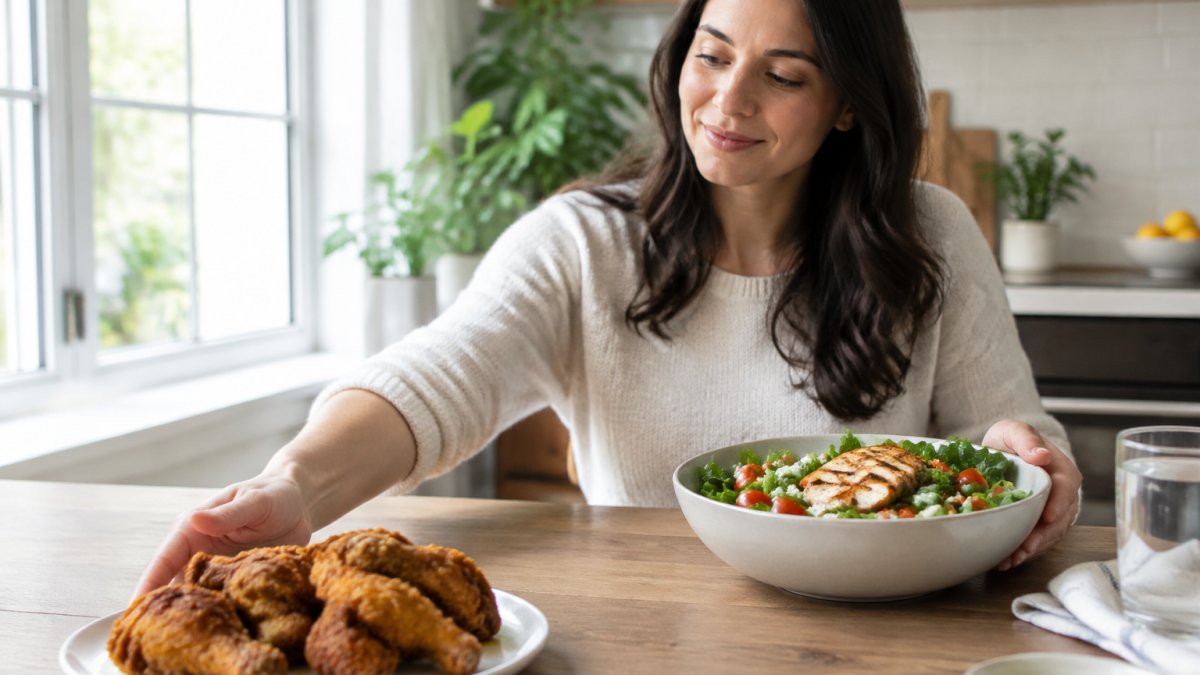
The mechanism matters more than the food list. Fat is the macronutrient that slows gastric emptying the most, and GLP-1 medications are already slowing it.
Here is what to limit, roughly in order of how often it causes trouble:
- Deep-fried foods: fried chicken, french fries, onion rings, fried fish, donuts
- Fatty red meat and processed meat: bacon, sausage, ribs, heavily marbled steaks
- Cream- and butter-based dishes: alfredo, cream soups, hollandaise, mac and cheese
- Full-fat dairy in large amounts: heavy cheese plates, whole-milk lattes, ice cream
- Baked goods and takeout: pizza, croissants, pastries, greasy fast food
Saturated fats and greasy foods are the common thread. They sit heavy and slow. A common mistake is assuming a smaller portion fixes it.
Fat Type and Cooking Method Change the Outcome
Not all fat behaves the same way in a slowed gut. Saturated fat from fried food and fatty meat tends to be the biggest trigger.
Cooking method is the lever most people overlook. Grilled, baked, poached, and air-fried preparations use far less added fat than deep-frying or pan-frying in butter.
Watch out: "Baked" and "grilled" menu items are often finished with butter or oil, so ask how the dish is actually prepared rather than trusting the label.
Practical Fat Swaps That Keep Meals Tolerable
You do not have to eat fat-free. You have to eat less of the fat that stalls digestion and more of the kind that does not.
- Swap fried chicken for grilled or baked chicken
- Swap cream sauces for tomato-based or broth-based sauces
- Swap full-fat cheese piled on a dish for a small amount of grated or crumbled cheese
A useful rule of thumb many practitioners share: if your fork leaves a grease sheen on the plate, the meal is likely to sit heavy. If the fat comes from a drizzle, a few nuts, or an avocado, you are usually in safer territory.
Why Fried Food Hits Harder on a GLP-1
Fried food combines two problems at once. It is high in fat, and the batter or breading often adds refined carbohydrates. That combination slows gastric emptying and can spike blood sugar, so you get the bloating of a slow-emptying stomach plus the crash of a fast carbohydrate.
If you crave something crispy, an air fryer with a light coating of oil gets you most of the texture with a fraction of the fat. It is not identical, but it is far more forgiving on a slowed gut.
Here is what to limit, roughly in order of how often it causes trouble.
| Food to limit | Examples | Why it causes trouble |
|---|---|---|
| Deep-fried foods | Fried chicken, french fries, onion rings, fried fish, donuts | Empty from the stomach the slowest |
| Fatty and processed meat | Bacon, sausage, ribs, heavily marbled steaks | High in saturated fat |
| Cream- and butter-based dishes | Alfredo, cream soups, hollandaise, mac and cheese | Sit heavy and slow |
| Full-fat dairy in large amounts | Heavy cheese plates, whole-milk lattes, ice cream | Large quantities of fat stall digestion |
| Baked goods and takeout | Pizza, croissants, pastries, greasy fast food | Greasy and often refined carbohydrates |
Sugary Drinks, Refined Carbohydrates and Blood Sugar Spikes
Sugary drinks and refined carbs are next on the list. They cause rapid blood sugar spikes followed by a crash, and many people on GLP-1 medications report feeling worse after them.
Watch out for:
- Soda, sweet tea, and fruit juice with added sugar
- White bread, white rice, and pastries
- Candy, cookies, and sweetened cereal
These foods also tend to be low in fiber and protein, so they don't keep you full. You end up hungry sooner, which works against the medication.
Swap them for whole grains, fruit with fiber, and water. Simple changes, real difference.
Alcohol, Spicy and Acidic Foods: What to Limit
Alcohol, spicy foods, and acidic foods aren't automatic no's, but most people do better limiting them. Each can irritate a stomach that's already working slower.
Alcohol adds empty calories and can worsen nausea. Spicy foods and acidic foods like citrus, tomatoes, and vinegar trigger cramping and heartburn for some people.
Try this approach:
- Skip alcohol on days you already feel queasy
- Test spicy foods in small amounts
- Pair acidic foods with milder options
You don't have to cut these out forever. Pay attention to how your body responds and adjust.
Foods to Prioritize for Nutritionally Dense Meals
While you're cutting back on triggers, fill your plate with nutritionally dense foods. These support metabolic health and keep nutrient absorption strong when your appetite is low.
Build meals around:
- Lean protein: chicken, fish, eggs, tofu
- Cooked vegetables and soft fruits
- Whole grains in small portions
For a deeper list of what to eat instead, see our guide on what foods to eat on GLP-1 medication.
Portion control matters here. Small, frequent meals beat three big ones. And mindful eating, slowing down and chewing well, helps your gut keep pace.
Protein Intake Requirements for GLP-1 Patients
Protein is the nutrient most people under-eat on these medications. Protein prioritization protects muscle while you lose fat, and appetite suppression makes hitting your target hard.
Aim to include protein at every meal. If solid food feels like too much, a shake is an easy fix. Our guide to getting enough protein with a low appetite covers practical ways to hit your goal without forcing down big meals.
How to Manage Nausea on GLP-1 Medications
Nausea is the most common complaint, and managing it starts with the foods above. Eat smaller meals, go easy on fat, and stay ahead of hydration.
A few habits that help:
- Eat slowly and stop before you feel full
- Keep bland snacks handy, like crackers or toast
- Sip water throughout the day
For a fuller set of tactics, our article on managing nausea on GLP-1 walks through seven practical strategies. If nausea is severe or won't let up, talk to your prescriber.
Safe Supplements to Take With Semaglutide
When appetite drops, nutrient gaps open up. That's where safe supplements to take with semaglutide come in.
The key is choosing clean, third-party tested products. Avoid proprietary blends so you know exactly what you're taking.
Before adding anything, check with your doctor. For a closer look at which options are safe, read our guide on safe supplements to take with semaglutide.
Eating Out and Meal Planning Without the Guesswork
Eating out and meal planning take a little strategy, but they are very doable. Most guides on what foods to avoid on GLP-1 medications stop at the avoidance list. This section goes further, because the hardest part of these medications is rarely a quiet dinner at home, it is a restaurant menu, a shared appetizer, a work lunch, or a family meal you did not plan.
How to Read a Restaurant Menu on a GLP-1
Menus are written to sell fat and salt, so scan for preparation words before you scan for dishes.
- Favor: grilled, baked, broiled, poached, steamed, roasted, dry-rubbed
- Limit: fried, crispy, battered, creamy, au gratin, alfredo, buttered, stuffed
- Ask for sauces and dressings on the side so you control the amount
Watch out: appetizers labeled "small plates" are often the highest-fat items on the menu, fried, cheesy, or cream-based, so they are not automatically the safer choice.
Social Eating Without the Side Effects
Social meals are where people on GLP-1 medications most often get derailed, and not only by the food. Alcohol, large portions, and eating quickly in a group all stack up.
- Eat a small, protein-forward snack before you go so you are not arriving hungry
- Order first so you are not swayed by the table
- Pace yourself with the group rather than finishing early
A common pattern is that people do fine at the restaurant and feel the effects later, once the meal has had time to sit. That is delayed gastric emptying doing its job.
A Simple Weekly Meal-Planning Framework
Meal planning is the part most avoidance guides skip, and it is the part that makes the rest of the advice stick. You do not need a rigid plan. You need a repeatable structure.
- Pick two or three lean proteins for the week, chicken, fish, eggs, tofu, or lean ground turkey
- Pick two or three vegetables you tolerate well, cooked soft rather than raw and fibrous
- Cook a batch of each early in the week and store in portions you can reheat
- Keep easy, safe snacks on hand: crackers, toast, yogurt, soft fruit, protein shakes
- Plan smaller, more frequent meals rather than three large ones
- Leave one or two nights open for eating out so the plan does not collapse when life happens
Batch-cooking lean proteins and vegetables early in the week means a tolerable meal is always a few minutes away, which matters most on days when appetite is low or nausea is creeping in. Our practical guide to eating enough on GLP-1 helps you plan meals and dine out without the guesswork.
Building a Plate When Appetite Is Low
When you are not hungry, the goal shifts from avoiding triggers to getting enough nutrition in a small volume. Build the plate in this order: protein first, then a cooked vegetable, then a small portion of whole grain, then a modest amount of healthy fat.
Afterglow was founded by someone who went through her own GLP-1 journey. Its formulas target muscle, gut, hydration, hair, and skin health.
Frequently Asked Questions
Are there foods that are strictly forbidden while taking GLP-1 medications?
No food is strictly forbidden, but some are worth avoiding because they reliably trigger side effects. High-fat and fried foods, sugary drinks, and heavy refined carbohydrates are the most common culprits for nausea, bloating and cramping. Alcohol and very spicy or acidic foods affect some people more than others. The practical approach is to treat these as foods to limit rather than ban, and to notice which ones cause discomfort for you specifically. Most people find that smaller portions and slower eating make a bigger difference than cutting anything out entirely.
Are bananas and other high-fiber fruits safe to eat on GLP-1 medications?
Yes, bananas and most fruits are fine for most people on GLP-1 medications. Fiber supports digestion and helps with satiety, which matters when appetite suppression makes it easy to under-eat. The caveat is timing and portion size: a large serving of high-fiber fruit eaten quickly can worsen bloating during the first weeks of treatment. Start with half a banana or a small handful of berries and see how you feel. Very high-fiber foods are best introduced gradually alongside adequate hydration.
Can I still eat eggs while taking semaglutide or similar drugs?
Eggs are a good choice for most people on semaglutide and similar medications. They provide high-quality protein, which supports muscle maintenance during rapid weight loss, and they are easy to digest when prepared simply, such as scrambled, poached or hard-boiled. The issue is usually preparation rather than the egg itself: frying in butter or oil adds fat that can trigger nausea. Pair eggs with a small portion of vegetables or whole-grain toast rather than greasy sides, and keep the serving to one or two eggs at a time.
Why do high-fat and fried foods cause issues for those on GLP-1s?
GLP-1 medications slow gastric emptying, meaning food stays in the stomach longer. Fat already takes longer to digest than protein or carbohydrates, so a high-fat meal compounds that delay and often produces nausea, reflux, bloating and cramping. Fried foods add a second problem: large amounts of oil in a single sitting. Grilling, baking, roasting or air-frying the same foods usually makes them tolerable. If you do eat something rich, keep the portion small and avoid lying down for an hour afterward.
The hardest part isn't knowing what to avoid. It's building a routine that keeps you nourished while your appetite is low. Afterglow makes that easier with a system of seven targeted formulas, each third-party tested and made in FDA-registered, GMP-certified facilities with no proprietary blends. Get started with Afterglow and give your body consistent support through your GLP-1 journey.
